
Search Engine Marketing Intelligence helps businesses move beyond guesswork by using data, insights, and advanced analysis to improve online performance. In today’s competitive market, companies need more than basic ads; they need data-driven marketing, search analytics, and competitive intelligence to understand customers and outperform competitors. This approach combines search data, advertising performance, and customer behavior to create smarter strategies.
With the right intelligence, marketers can discover valuable opportunities, optimize campaigns, and make better decisions that increase visibility, conversions, and long-term growth. Whether you run a small business or a large brand, Search Engine Marketing Intelligence helps you compete effectively in the modern digital landscape.
What Is Search Engine Marketing Intelligence?
Search Engine Marketing Intelligence is the process of collecting, analyzing, and using search-related data to improve marketing decisions. It combines search data analysis, competitor research, advertising insights, and performance tracking to help businesses understand what works and what needs improvement.
Unlike traditional paid search marketing, which focuses mainly on bidding for keywords and creating ads, Search Engine Marketing Intelligence looks at the complete picture. It studies search trends, customer behavior, competitor actions, and campaign results to uncover actionable insights that improve marketing performance.
Search Engine Marketing Intelligence uses information from different sources, including search engines, advertising platforms, analytics systems, and competitor monitoring tools. Marketers use this information for better keyword research, campaign optimization, and smarter budget planning.
For example, a company selling fitness products may discover through search intelligence that customers are not only searching for “fitness equipment” but also using specific buyer intent keywords like “best home gym equipment for small spaces.” This insight allows the company to create targeted campaigns that match real customer needs.
How Search Engine Marketing Intelligence Differs from Traditional SEM
Traditional SEM focuses on visibility through paid advertising. Search Engine Marketing Intelligence goes further by explaining why certain campaigns succeed and how businesses can improve future results.
The difference becomes clear when comparing both approaches:
| Traditional SEM | Search Engine Marketing Intelligence |
| Focuses on running ads | Focuses on understanding the data behind ads |
| Uses keyword bidding | Uses keyword and competitor insights |
| Measures basic results | Studies complete campaign performance |
| Reacts to changes | Predicts future opportunities |
With Search Engine Marketing Intelligence, marketers do not simply ask, “How many clicks did this ad receive?” They ask deeper questions such as:
- Why did customers choose this keyword?
- Which competitors are gaining attention?
- Which campaigns generate profitable customers?
- How can advertising budgets perform better?
This deeper approach creates a stronger digital marketing strategy because every decision connects with real customer behavior.
Why Search Marketing Intelligence Matters in the AI Search Era
The search landscape has changed dramatically as artificial intelligence influences how people find information, products, and services. Search engines now understand context, conversations, and user needs better than ever before. Because of this change, businesses need advanced search analytics and intelligence systems to stay competitive.
Modern customers do not always follow a simple search journey. They compare products, read reviews, ask questions, and explore multiple platforms before purchasing. Understanding these changing consumer behavior patterns helps marketers create campaigns that reach customers at the right moment.
AI-powered search also increases the importance of accurate data. Businesses need real-time insights to understand changing search trends, customer preferences, and competitor movements. According to Google Search Central documentation, understanding how search systems evaluate content helps marketers create more effective and user-focused strategies. Without intelligence, marketers may spend money targeting keywords that attract visitors but fail to generate sales.
The Role of Data in Modern Search Marketing Intelligence
Data has become the foundation of successful search marketing. Every search, click, and interaction provides valuable information about customers. Through proper data collection and marketing data analysis, companies can identify patterns that improve campaign results.
For example, an online retailer may notice that customer searches for “eco-friendly products” are increasing during certain months. With this information, the business can adjust its campaigns, update product messaging, and prepare new offers before competitors react.
Search intelligence also supports predictive analytics, which helps marketers forecast future behavior. Instead of only analyzing past performance, businesses can prepare for upcoming opportunities and market changes.
A strong intelligence system helps companies understand:
| Area | Intelligence Benefit |
| Customer behavior | Understand what buyers want. |
| Keywords | Find valuable search opportunities. |
| Competitors | Identify market gaps |
| Advertising | Improve campaign efficiency |
| Budget | Spend money where results are stronger. |
Keyword and Search Intent Intelligence
Keyword intelligence helps marketers understand what people search for and why they search. Instead of focusing only on high-volume terms, businesses analyze search intent to discover what users actually need.
Effective keyword research includes studying:
- High-intent keywords
- Long-tail keywords
- Search volume changes
- Competition levels
- Buyer journey stages
Using advanced keyword research tools, marketers can identify valuable keyword opportunities that competitors may overlook.
For example, a software company may find that “project management software” is highly competitive. However, “project management software for remote teams” may attract fewer searches but bring customers who are closer to buying.
This approach improves search advertising, SEO planning, and overall campaign targeting.
Competitor Intelligence and Market Analysis
Understanding competitors is one of the most important parts of Search Engine Marketing Intelligence. Businesses need to know what competitors are promoting, which keywords they target, and how they position themselves.
Through competitive intelligence, marketers can perform competitor research and understand the current competitive landscape.
| Advertising budget trends | Where they invest |
Using competitor analysis tools, companies can perform competitor keyword tracking and competitor ad monitoring to discover new strategies.
This information improves market positioning and helps businesses build a stronger competitive advantage.
The Core Components of Search Marketing Intelligence
Paid Search Performance Intelligence
Paid search performance intelligence focuses on understanding how advertising campaigns perform after launch. Running ads is only the beginning. Marketers need to analyze every important detail, from keyword selection to customer actions after clicking an ad.
Through PPC intelligence, businesses can understand which campaigns create real value and which ones waste budget. This process includes paid search data analysis, ad testing, and measuring important results such as Cost per click (CPC), Click-through rate (CTR), and Cost per acquisition (CPA).
For example, a company may discover that one keyword receives thousands of clicks but generates very few sales. At the same time, another keyword with fewer clicks may bring highly valuable customers. This type of insight allows marketers to improve PPC campaigns, adjust spending, and increase Return on ad spend (ROAS).
Audience and Consumer Behavior Intelligence
Understanding your audience is one of the strongest advantages of Search Marketing Intelligence. Businesses need to know who their customers are, what problems they want to solve, and what influences their buying decisions.
With audience insights, marketers study consumer behavior, user intent, and online interactions to create more personalized campaigns. This information helps businesses improve targeting, messaging, and customer experiences across different channels.
For instance, a travel company may discover that customers search differently when planning luxury vacations compared to budget trips. By understanding these differences, the company can create specific ads, content, and offers for each audience group.
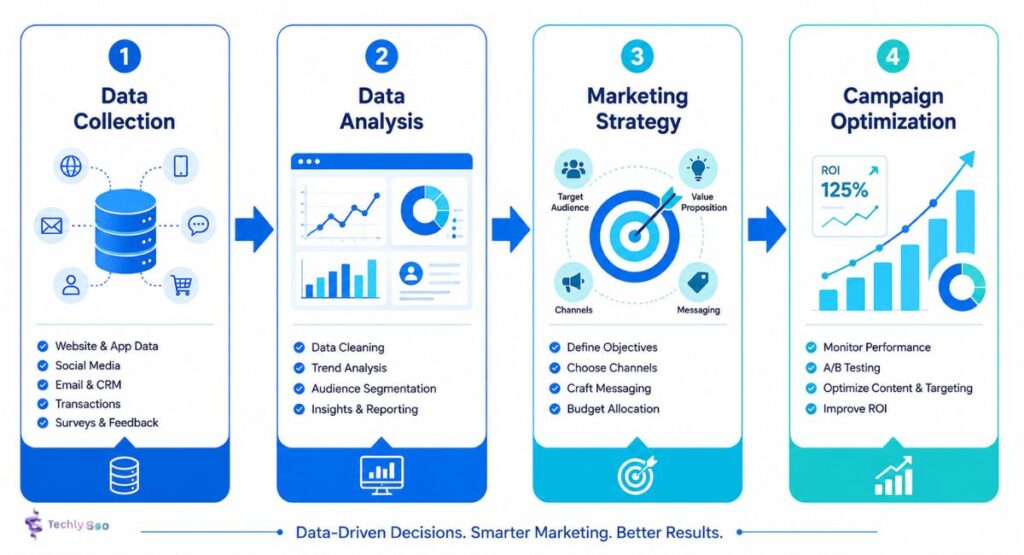
How Search Engine Marketing Intelligence Works
Search Engine Marketing Intelligence works through a continuous process of collecting information, analyzing patterns, creating strategies, and improving campaigns. It combines technology, human analysis, and marketing experience to turn raw data into useful decisions.
The process helps businesses understand what customers search for, how competitors attract attention, and where new opportunities exist. Instead of guessing what might work, marketers use facts to guide their next move.
Step 1:Data Collection From Multiple Sources
The first step in Search Engine Marketing Intelligence is collecting accurate information. Marketers gather data from search engines, advertising platforms, websites, customer interactions, and competitor activities.
This data collection process may include:
| Data Source | Information Collected |
| Search engines | Keywords, rankings, search trends |
| Advertising platforms | Clicks, conversions, spending |
| Competitors | Ads, keywords, market activity |
| Analytics platforms | Customer behavior and website actions |
This information creates a foundation for better marketing decisions. Without reliable data, even experienced marketers may make choices based on assumptions rather than facts.
Modern businesses also use marketing intelligence tools to automate data gathering and create clear reports. These tools save time and help teams discover patterns faster.
Step 2: Analyzing Keywords, Competitors, and Search Trends
After collecting data, marketers analyze it to discover valuable opportunities. This stage includes search query analysis, competitor research, and identifying changes in customer demand.
A strong analysis process looks at:
| Analysis Area | Purpose |
| Keyword performance | Find profitable search terms. |
| Competitor activity | Understand market strategies |
| Search trends | Identify future opportunities |
| Customer behavior | Improve targeting |
Through search volume analysis and keyword trends, marketers can discover which topics are growing and which areas have become less valuable.
For example, if searches for a product category increase rapidly, businesses can prepare campaigns before competition becomes stronger. This creates early advantages in the market.
Step 3: Turning Data Into Actionable Marketing Strategies
Data alone does not create success. Businesses need to transform information into practical actions. This is where Search Engine Marketing Intelligence creates the biggest impact.
Marketers use insights to improve:
- Keyword bidding decisions
- Ad messaging
- Landing page experiences
- Budget allocation
- Audience targeting
A company running pay-per-click advertising may learn that customers respond better to benefit-focused headlines rather than simple product descriptions. By changing the ad message, the company can improve engagement and conversions.
This process combines advertising intelligence, marketing automation, and human creativity to build stronger campaigns.
Step 4: Campaign Monitoring and Continuous Optimization
Successful search marketing requires constant improvement. Markets change, competitors launch new offers, and customer interests shift over time.
Through continuous monitoring, businesses track campaign performance metrics and identify areas that need improvement. Marketers use conversion tracking, A/B testing, and ad performance analysis to understand what creates the best results.
For example, an online store may test two different advertisements. One focuses on price while the other highlights product quality. The winning version provides valuable information that improves future campaigns.
This process is called campaign optimization. It ensures advertising budgets continue working effectively.
Key Benefits of Search Marketing Intelligence
Search Marketing Intelligence gives businesses a clearer understanding of their market, customers, and competitors. It removes uncertainty and helps companies build campaigns based on evidence instead of assumptions.
Whether a business runs small paid search campaigns or manages large advertising accounts, intelligence helps improve efficiency and long-term results.
Improves Data-Driven Decision Making
One major benefit of Search Marketing Intelligence is better decision-making. Instead of choosing keywords or advertising strategies based only on experience, marketers use measurable information.
With data-driven decisions, companies can understand which strategies generate results and which require improvement. This reduces unnecessary spending and improves overall marketing efficiency.
For example, a company may discover that a specific audience segment converts better during certain hours. The business can then adjust campaigns to reach customers when they are most likely to take action.
Increases ROI and Advertising Efficiency
Every business wants better results from marketing investments. Search intelligence helps companies improve ROI measurement by showing where money creates the highest return.
Through detailed analysis of campaign performance, marketers can improve:
| Improvement Area | Result |
| Keyword targeting | More qualified visitors |
| Ad optimization | Better engagement |
| Budget management | Less wasted spending |
| Audience targeting | Higher conversions |
Better insights help companies improve conversion rates, increase revenue growth, and achieve stronger advertising performance.
Helps Discover New Market Opportunities
Markets constantly change. New customer needs appear, competitors change their strategies, and search behavior evolves.
Search Marketing Intelligence helps businesses discover market opportunities before they become obvious. Through trend monitoring and business intelligence, marketers can identify new products, audiences, and content ideas.
For example, a technology company may notice increasing searches for artificial intelligence tools. This insight allows the company to create new campaigns and educational content before competitors dominate the space.
Creates a Strong Competitive Advantage
Businesses that understand their market faster often perform better than competitors. Search intelligence provides valuable information about industry movement, customer needs, and competitor strategies.
By using industry benchmarking, share of search analysis, and competitor insights, companies can improve their strategic planning and maintain stronger market positions.
Search intelligence turns marketing from a reactive activity into a proactive growth system.
Search Engine Marketing Intelligence vs SEO vs SEM
Search Marketing Intelligence, SEO, and SEM are connected, but they serve different purposes. Many businesses use these terms together, but each one plays a unique role in building a successful online presence. Understanding the difference helps marketers create a balanced digital marketing strategy.
Search engine optimization focuses on improving organic rankings, while search engine marketing mainly focuses on paid visibility through advertisements. Search Marketing Intelligence supports both areas by providing deeper information about customers, competitors, and market conditions.
A company that combines SEO insights with paid search intelligence can make smarter decisions. For example, SEO data may show which topics attract visitors, while SEM data can reveal which keywords generate conversions. Search intelligence connects these insights to create stronger marketing decisions.
| Feature | SEO | SEM | Search Marketing Intelligence |
| Main Goal | Improve organic visibility | Generate paid traffic | Improve marketing decisions through data |
| Main Focus | Content, rankings, backlinks | Ads, bids, campaigns | Insights, analysis, predictions |
| Time Frame | Long-term growth | Immediate visibility | Continuous improvement |
| Key Activities | SEO strategy, content optimization | PPC campaigns, keyword bidding | Competitor research, search data analysis |
How SEO, SEM, and Search Intelligence Work Together
A successful online strategy does not depend on only one channel. SEO, SEM, and intelligence work better when they support each other.
For example, a business may use SERP analysis to understand which pages rank well organically. At the same time, it can use paid advertising data to discover valuable keywords. These insights help improve content, ads, and overall customer targeting.
Search Marketing Intelligence also improves SEO performance tracking by showing which topics, keywords, and competitors create the biggest opportunities. It helps businesses understand not only where they rank but why they rank and how they can improve.
When companies combine organic insights, paid campaigns, and intelligence tools, they create a stronger search presence and improve their chances of long-term success.
Best Search Engine Marketing Intelligence Tools
The right tools make Search Marketing Intelligence easier because they collect, organize, and analyze large amounts of marketing data. Modern marketers use different platforms for keyword research, competitor monitoring, advertising analysis, and reporting.
The best tools depend on business goals, budget, and campaign size. Some platforms focus on SEO and competitor research, while others provide deeper paid advertising insights.
Google Ads and Keyword Research Tools
Google Ads remains one of the most important platforms for businesses running paid search campaigns. It provides valuable advertising data, including keyword performance, audience information, and conversion results.
Through Google Keyword Planner, marketers can discover search volume, keyword competition, and new keyword ideas. These insights support better usage of keyword research tools and improve campaign planning.
Google Ads intelligence helps businesses understand:
| Feature | Benefit |
| Keyword data | Find valuable search terms. |
| Ad reports | Measure campaign results |
| Audience data | Improve targeting |
| Conversion tracking | Understand customer actions |
SEMrush and Ahrefs for Competitive Research
Semrush and Ahrefs are widely used for competitor research, keyword analysis, and SEO insights.
These platforms help marketers perform backlink analysis, competitor monitoring, and content analysis. They provide information about what competitors rank for, which keywords bring traffic, and where new opportunities exist.
For example, a business can analyze a competitor’s successful pages and discover missing topics in its own content strategy. This creates opportunities for better organic visibility and improved search rankings.
Competitor Advertising Intelligence Tools
Competitor-focused platforms help businesses understand how other companies approach paid advertising.
Tools such as SpyFu, iSpionage, and Adbeat help marketers study competitor ads, keywords, and advertising strategies.
These platforms support:
- Competitor keyword tracking
- Competitor ad monitoring
- Competitive landscape analysis
- Market positioning research
This information helps businesses understand what competitors do well and where they can create better campaigns.
How to Build an Effective Search Engine Marketing Intelligence Strategy
Building a successful Search Engine Marketing Intelligence strategy requires more than collecting data. Businesses need a clear process that connects information with measurable goals.
A strong strategy combines research, analysis, testing, and improvement. It allows marketers to understand customers better while making every advertising decision more effective.
Define Clear Marketing Goals
Before collecting data, businesses should define what they want to achieve. Clear goals help marketers choose the right metrics and tools.
Common goals include improving:
- Customer acquisition
- Lead generation
- Sales performance
- Advertising efficiency
- Brand awareness
For example, a company trying to increase sales may focus on conversion data and revenue metrics. A company building awareness may focus more on visibility and audience growth.
Clear goals create better marketing KPIs and make it easier to measure success.
Research Your Audience and Competitors
Understanding customers and competitors creates the foundation of a strong intelligence strategy.
Businesses should analyze:
| Research Area | Questions to Answer |
| Audience | What do customers search for? |
| Keywords | Which terms show buying intent? |
| Competitors | What strategies are working? |
| Market | What trends are changing? |
Through search intent analysis, businesses can understand customer needs at different stages of the buying journey.
Competitor research also reveals gaps that businesses can use to create better campaigns and stronger offers.
Analyze Data and Find Opportunities
Once businesses collect information, they need to identify patterns and opportunities. This includes reviewing campaign reports, customer behavior, competitor actions, and industry changes.
Good analysis helps marketers discover:
- New keywords
- Better audience segments
- Untapped markets
- Improved advertising messages
Using data interpretation, businesses can transform numbers into practical decisions.
Test, Measure, and Improve Continuously
Search marketing is never finished. Successful businesses constantly test new ideas and improve their campaigns.
Through A/B testing, marketers can compare different ads, landing pages, and messages. They can then use performance data to select the best-performing options.
Continuous improvement creates better advertising optimization and helps businesses adapt to changing customer expectations.
Common Challenges and Mistakes to Avoid in Search Engine Marketing Intelligence
Search Marketing Intelligence can transform how businesses approach search campaigns, but success depends on using data correctly. Many companies collect large amounts of information but struggle to turn that data into useful actions. Without a clear process, intelligence can become confusing instead of helpful.
The biggest challenge is not finding data. It is understanding which information matters and how to use it. Businesses need the right tools, skilled teams, and clear goals to avoid poor decisions.
Depending on Inaccurate or Limited Data
Reliable data is the foundation of successful Search Marketing Intelligence. If businesses use incomplete or inaccurate information, they may create campaigns that target the wrong audience or waste advertising budgets.
For example, a keyword may appear popular because it has high search volume, but it may not attract customers who are ready to buy. Marketers need to combine search volume analysis, customer behavior, and conversion data to understand the real value of a keyword.
Using trusted marketing intelligence tools and regularly checking data sources helps businesses maintain accuracy. Good data leads to better performance insights and stronger marketing outcomes.
Collecting Data Without Taking Action
One common mistake businesses make is collecting too much information without creating a plan. Reports, dashboards, and analytics are useful only when they lead to better decisions.
Many marketers track hundreds of numbers but fail to focus on important results, such as:
| Data Type | Why It Matters |
| Traffic data | Shows audience interest |
| Conversion data | Shows business impact |
| Cost data | Shows spending efficiency |
| Competitor data | Shows market changes |
Successful Search Marketing Intelligence focuses on actionable insights instead of endless reporting. The goal is not to collect more data. The goal is to make smarter marketing decisions.
Ignoring Customer Search Intent
A major mistake in search marketing is focusing only on keywords without understanding why people search. A keyword does not tell the complete story. The customer behind the search matters more.
Through user intent, businesses can understand whether someone wants information, wants to compare options, or is ready to purchase.
For example, someone searching “what are running shoes” has a different need from someone searching “buy Nike running shoes size 10.” Both searches contain valuable information, but the marketing approach should be different.
Understanding consumer behavior helps businesses create better ads, content, and offers.
Using Too Many Tools Without a Clear Strategy
Businesses often believe that using more tools automatically creates better results. However, too many platforms can create confusion and increase costs.
A strong strategy uses tools with a clear purpose. One platform may help with keyword research, another with competitor analysis, and another with reporting.
The focus should remain on creating meaningful marketing decisions rather than collecting unnecessary reports. Technology should support human thinking, not replace strategic planning.
Measuring Success: Important Metrics and KPIs in Search Engine Marketing Intelligence
Measuring performance is one of the most valuable parts of Search Marketing Intelligence. Without proper measurement, businesses cannot understand whether campaigns are successful or where improvements are needed.
The right metrics help marketers evaluate advertising quality, customer behavior, and overall business growth. They provide a clear picture of whether strategies are producing valuable results.
PPC and Advertising Performance Metrics
Paid advertising requires careful monitoring because even small mistakes can increase costs. Businesses use several metrics to understand campaign efficiency.
Important advertising metrics include:
| Metric | Meaning |
| Cost per click (CPC) | Amount paid for each ad click |
| Click-through rate (CTR) | Percentage of users who click an ad |
| Cost per acquisition (CPA) | Cost of gaining a customer |
| Return on ad spend (ROAS) | Revenue earned from advertising investment |
| Conversion rate | Percentage of visitors who complete an action |
These measurements support better campaign performance metrics and help marketers improve PPC optimization.
For example, a campaign with a low CPC may look successful, but if it creates no sales, the results are not valuable. Smart marketers analyze multiple metrics together.
Search Intelligence and Market Metrics
Beyond advertising performance, businesses need broader search metrics to understand their position in the market.
Important intelligence measurements include:
| Metric | Purpose |
| Search visibility | Measures online presence |
| Share of search | Shows market attention compared to competitors |
| Keyword growth | Identifies new opportunities |
| Competitor activity | Tracks market movement |
These insights support competitive intelligence and help companies understand their place within the search ecosystem.
A business may discover that competitors are gaining attention for specific topics. This information creates opportunities for new content, ads, and customer engagement strategies.
Business Growth and Revenue Metrics
The final goal of Search Marketing Intelligence is business growth. Marketing success should not only focus on clicks or impressions. It should connect with real business results.
Important growth measurements include:
- Customer acquisition
- Revenue growth
- Lead quality
- Sales performance
- Customer lifetime value
Strong measurement connects marketing activities with financial outcomes. This helps companies understand the true impact of their search strategies.

Future Trends in Search Engine Marketing Intelligence
Search Marketing Intelligence will continue evolving as technology changes how people search, shop, and interact online. Businesses that adapt early will have stronger opportunities to compete in the future.
The next generation of search intelligence will focus on automation, prediction, personalization, and faster decision-making.
AI-Powered Search Analytics
Artificial intelligence is becoming a major part of search marketing. AI systems can analyze large amounts of information quickly and identify patterns that humans may miss.
Future intelligence platforms will provide deeper predictive analytics, helping marketers understand possible customer actions before they happen.
For example, AI may identify increasing interest in a product category before competitors notice the trend. Businesses can then prepare campaigns earlier and capture new demand.
Predictive Marketing and Automation
Automation will make search marketing faster and more efficient. Businesses will use AI-powered systems to manage campaigns, analyze results, and recommend improvements.
With advanced marketing automation, marketers can:
- Adjust bids automatically
- Identify high-performing keywords
- Personalize customer experiences
- Improve campaign timing
However, human strategy will remain important. Technology provides information, but marketers decide how to use it effectively.
First-Party Data and Privacy-Focused Marketing
Privacy changes are making customer data more valuable. Businesses will need stronger systems for collecting and using their own customer information.
First-party data helps companies understand audiences without depending completely on external sources. It supports better targeting, personalization, and customer relationships.
This shift will increase the importance of ethical data collection and responsible marketing practices.
Real-Time Search Intelligence
The future of search marketing will depend on speed. Customer interests can change quickly, and businesses need fast information to respond.
Real-time platforms will provide instant updates about:
- Search trends
- Competitor changes
- Customer behavior
- Campaign performance
Companies that use real-time insights will have a stronger ability to adapt and find new market opportunities.
Conclusion
Search Engine Marketing Intelligence helps businesses make smarter marketing decisions by using data, competitor insights, and customer behavior analysis. In 2026, companies that use intelligence-driven strategies can improve ad performance, reduce wasted spending, and find better opportunities in the changing search landscape.
FAQs
What Is Search Engine Marketing Intelligence?
Search Engine Marketing Intelligence uses search, advertising, and competitor data to create smarter marketing strategies.
How Does Search Marketing Intelligence Improve PPC Campaigns?
It improves PPC campaigns by identifying better keywords, optimizing ads, and increasing campaign efficiency.
What Are the Best Search Marketing Intelligence Tools?
Popular tools include Google Ads, SEMrush, Ahrefs, SpyFu, and Similarweb.
Is Search Marketing Intelligence Different From SEM?
Yes, SEM runs paid campaigns, while Search Marketing Intelligence analyzes data to improve those campaigns.
Why Is Search Marketing Intelligence Important in 2026?
It helps businesses adapt to AI search, changing customer behavior, and increasing digital competition.
Can Small Businesses Use Search Marketing Intelligence?
Yes, small businesses can use affordable tools to understand customers and improve marketing results.