
Marketing workflow automation is changing how companies plan, start, and grow their programs. With smart systems, you can set up automated workflows that respond right away to what customers do, so you don’t have to perform the work yourself. This method unifies your whole marketing technology (martech stack) into a single, efficient engine, enhances campaign execution, and fortifies consumer segmentation. When done correctly, it makes operations more efficient and gives your team more time to work on strategy instead of doing the same activities again and over. Companies who invest in automation move faster, personalize better, and make more money without working more in the competitive U.S. market of today.
What Is Workflow Automation in Marketing?
What is marketing workflow automation? It’s like the engine that makes digital marketing automation work. It links triggers, activities, and data into organized automated workflows that run on their own. You make smart sequences that respond to behavior instead of sending emails one at a time.
Simple automated email sequencing gave way to more sophisticated systems that used AI-powered automation and predictive analytics as marketing automation developed over time. Early tools focused on email. Today’s platforms manage multi-channel campaigns, content distribution, and deep CRM integration across a complete marketing technology (martech stack).
Core Components of Marketing Workflow Automation
To understand how marketing automation works, you must understand workflow triggers and conditions. A trigger starts a workflow. An action executes a response. Conditions control direction. Together they form structured workflow triggers and actions that power scalable systems.
The core infrastructure includes lead scoring, smart customer segmentation, automated updates, and secure digital asset management. These systems enable clean campaign orchestration and consistent marketing process standardization across teams.
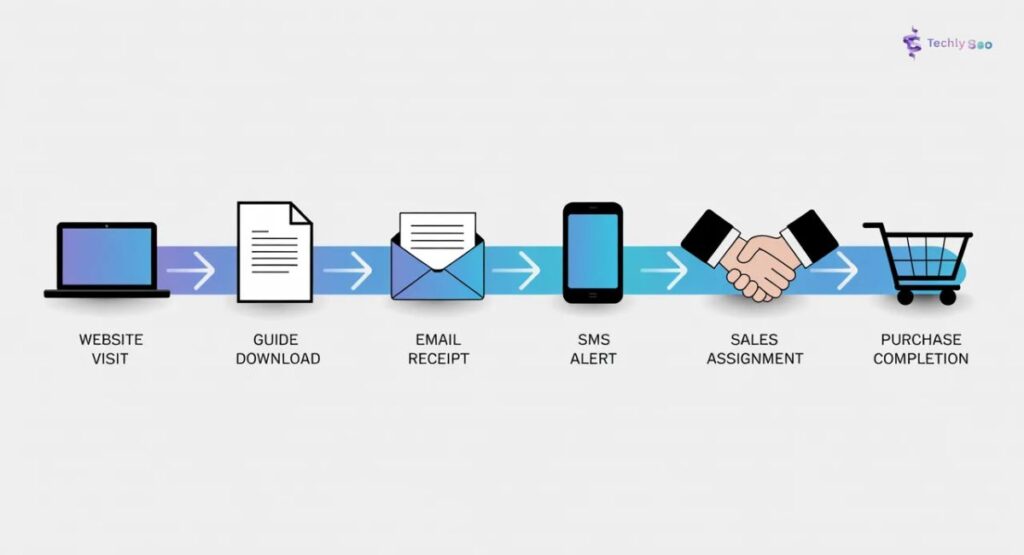
How Marketing Automation Workflows Actually Work
Every workflow begins with behavior. A form submission. A product view. A cart abandonment. These events activate cross-channel triggers inside your platform. From there, predefined workflow triggers and conditions move prospects through email, SMS, paid ads, or CRM pipelines.
Modern automated campaign management integrates deeply with sales tools through CRM integration. Data flows instantly. Reports update automatically. Teams rely on automated performance reporting to track engagement and conversions in real time.
Why Automation Matters in Modern Campaigns
There are several benefits of marketing automation besides saving time. Companies claim that they can make better use of their marketing resources and that their operations are up to 30% more efficient. Systems take care of boring tasks so that teams can focus on strategy and creativity. Strong marketing that is based on data makes it possible to truly personalize at scale. Without having to guess, you send the right word at the right time. That consistency builds trust. It also increases revenue across complex multi-channel campaigns.
10 Powerful Marketing Automation Workflow Examples
Real marketing workflow examples show how automation creates growth. A SaaS company uses lead scoring to prioritize sales calls. An ecommerce brand runs cart recovery through behavioral targeting. AI-powered onboarding processes are used in marketing automation by a business-to-business company.
Additional examples include win-back systems, referral programs, event follow-ups, re-engagement campaigns, upsell flows, review requests, and trial conversion sequences. Both depend on exact customer journey orchestration and organized process optimization.
| Example | Trigger | Result |
| Cart Recovery | Abandoned checkout | Revenue recovery |
| Lead Nurture | Guide download | Sales conversion |
| Onboarding | New signup | Faster activation |
| Re-engagement | 60-day inactivity | Customer retention |
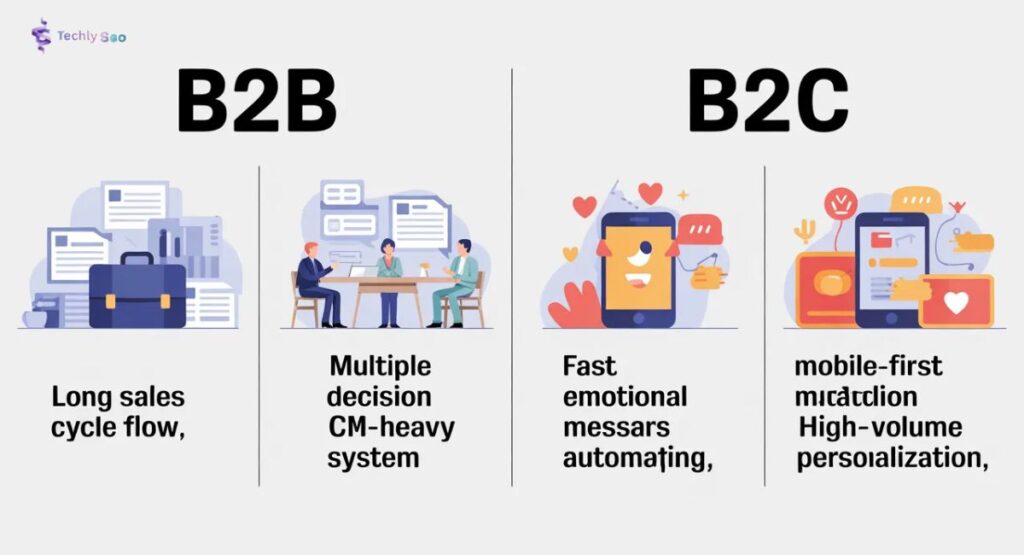
B2B vs B2C Automation Strategies
B2B businesses employ larger lead scoring and extended travels. They depend on structured campaign orchestration and close CRM integration. Decisions involve multiple stakeholders. Automation supports detailed education and trust building.
B2C brands move faster. They rely on emotional messaging and rapid content distribution. They prioritize high-volume automated workflows and instant personalization. Both models require strong workflow complexity management and smart workflow optimization.
| Factor | B2B | B2C |
| Sales Cycle | Long | Short |
| Focus | Education | Emotion |
| Automation Depth | High segmentation | High volume |
| Personalization | Account-based | Behavioral |
Step-by-Step Guide to Implementing Marketing Automation Workflows
Mapping your existing processes is the first step in implementing marketing automation successfully. Find the bottlenecks. Improve approval workflows. Build a strong unified customer data strategy before launching new tools.
Next comes smart automation platform selection. Select platforms that provide advanced analytics, scalable marketing system, and smooth CRM connectivity. Begin small. Measure impact. Then expand automation step by step.
Common Marketing Automation Challenges and How to Solve Them
A lot of companies have trouble with marketing automation since their systems don’t operate together and the data is hard to analyze. Bad segmentation hurts results. Results are harmed by poor segmentation. Overcomplicated flows slow teams down. These problems make people less likely to trust automation.
Smart marketing automation solution put an emphasis on integration and clarity.
Use platforms with open APIs. Simplify workflows. Align data sources. When you do workflow complexity management right, performance goes up by a lot.
How AI and Predictive Analytics Are Transforming Marketing Workflows
AI in marketing automation changes everything. Instead of static rules, platforms now use predictive marketing systems to anticipate behavior. They adjust messaging automatically through intelligent workflow optimization.
Advanced AI-powered automation looks at send times, content types, and consumer behavior. This makes customer journey orchestration smarter and growth steadier. The end consequence is more involvement and trust.
Choosing the Right Marketing Automation Platform
Think at how well an automation platform scales, analyzes data, connects with other tools, and is user-friendly. Discover choices for flexible martech stack integration, accurate report generation, and automated campaign management.
Your platform should make it easy to run campaigns, get detailed data, and share content reliably. The finest systems make marketing more effective while still following U.S. privacy laws.
The Future of Automated Marketing Systems
Systems that can run on their own are the way of the future for marketing workflow automation. You can expect more accurate predictive analytics, better automation driven by AI, and decision engines that work in real time. Automation will feel invisible yet powerful.
Automation of work processes today gives businesses an edge tomorrow. As marketing technology changes, brands that are smart, connected, and flexible will win.