
Private AI is quickly becoming the preferred choice for modern organizations that want to use artificial intelligence without risking their data. As enterprises adopt smarter enterprise AI solutions, concerns around AI data privacy and security continue to grow. Unlike public tools, private artificial intelligence allows businesses to keep full control of their information while still benefiting from generative AI (GenAI). This method helps businesses work more efficiently, make smarter decisions, and keep sensitive assets safe all at the same time. Private AI gives US businesses that care about trust, compliance, and long-term growth a safe and useful method to develop with confidence.
Understanding Secure Enterprise Artificial Intelligence
secure AI models refers to AI systems that run inside a company’s-controlled environment. Unlike open tools, these systems rely on enterprise AI solutions built to protect data. Companies use private artificial intelligence to keep ownership of their models, workflows, and insights while still benefiting from generative AI (GenAI).
In practice, this approach uses secure AI models that only access approved company resources. These models rely on internal data AI models instead of public datasets. That makes them ideal for AI for businesses that value trust, compliance, and long-term growth
How Enterprise AI Systems Protect Sensitive Data
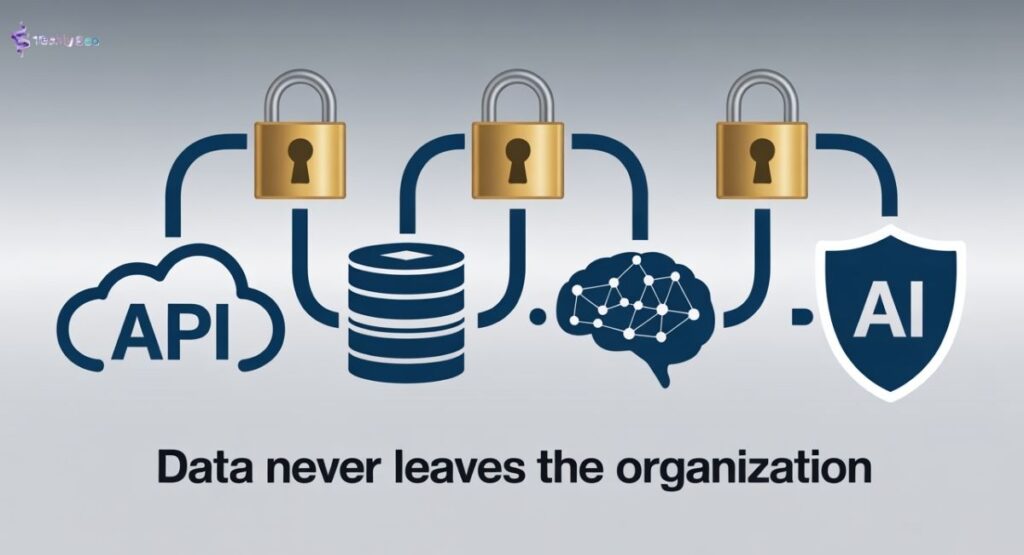
private artificial intelligence operates through a protected private AI architecture. Requests flow through application programming interfaces (APIs) into internal databases, file systems, and tools like SharePoint. The system processes this information and returns answers without exposing data outside the organization.
Behind the scenes, large language models (LLMs) power responses through a natural language interface. These models work with enterprise systems like CRM and ERP systems to let AI make decisions while keeping company data safe.
Private AI vs Public AI: Key Differences
The debate around public vs private AI centers on control and risk. Public tools such as ChatGPT or Microsoft Copilot rely on shared infrastructure. Data may leave company boundaries, which raises AI privacy concerns and AI security risks.
Private systems keep information within private data sources. They protect intellectual property (IP) and lower the danger of cyber attacks. Because of this distinction, private models are better for businesses in regulated or data-sensitive fields that want to use AI.
| Aspect | Public AI | Private AI |
| Data control | Limited | Full ownership |
| Training data | Public sources | Internal sources |
| Compliance | Uncertain | Strong governance |
Why Data Privacy Is Critical in Enterprise AI
Enterprises handle massive volumes of sensitive enterprise data every day. Customer records, contracts, and financial data require strict AI data privacy controls. Any exposure can harm trust and revenue.
Strong privacy also supports data sovereignty. US companies must follow local and global rules while protecting their assets. Private systems enable AI governance frameworks that align innovation with accountability and transparency.
Business Benefits of Secure AI Deployments
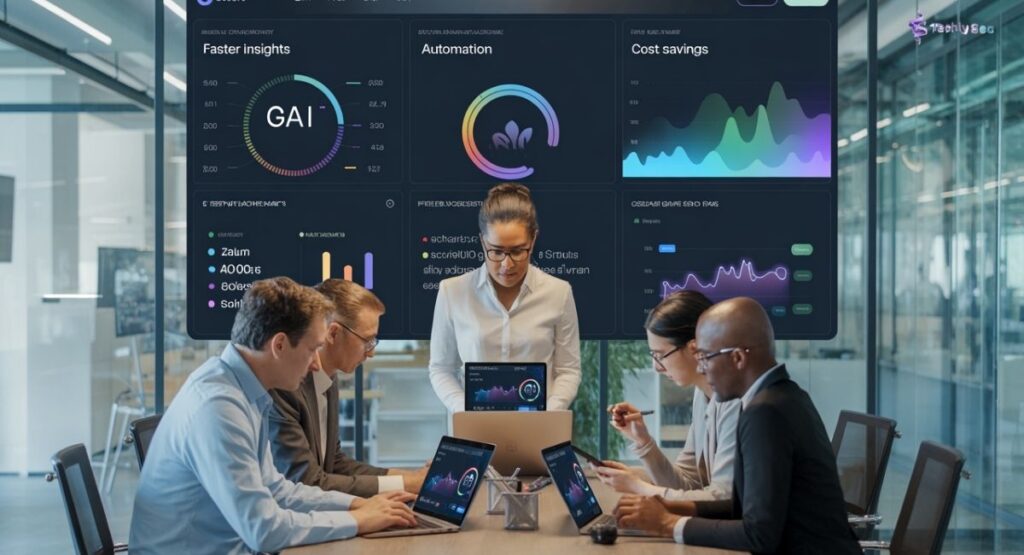
secure enterprise AI improves AI operational efficiency by letting teams ask questions directly from company systems. This reduces manual work and speeds insights. Over time, automation also drives AI cost reduction across departments.
Another advantage is accuracy. Models trained with internal context deliver better answers for AI for customer engagement and operations. These benefits make private systems a reliable choice for long-term AI deployment in enterprises.
Challenges and Limitations of Private AI
enterprise AI systems requires serious investment in AI infrastructure. Companies must manage compute, storage, and security together. This can slow early adoption for teams without experience.
Talent is another hurdle. Managing AI model training, updates, and monitoring takes skilled engineers. Without planning, organizations may struggle with scale and performance.
How Retrieval-Augmented Generation Enhances AI Security
Retrieval-Augmented Generation (RAG) allows AI models to pull answers from company data before generating responses. This method avoids exposing raw data to external platforms. It supports AI transparency and trust.
With RAG, companies avoid heavy AI fine-tuning while still building smart AI knowledge hubs. The result is faster deployment with strong privacy and control.
Private AI vs Hybrid AI Models
Hybrid systems mix public tools with private layers. They suit companies that want flexibility but still face AI privacy concerns. However, sensitive workloads often remain internal.
Pure private models provide stronger AI compliance solutions. They give leaders peace of mind when handling regulated or confidential data.
Enterprise Use Cases Across Business Operations
Large enterprises use private AI for analytics, automation, and support. Customer teams rely on AI answers pulled from internal knowledge bases. Operations teams use insights to predict issues early.
A US financial firm reduced response times by 40 percent after deploying private models connected to internal systems. The project improved speed without risking data exposure.
AI Adoption in Highly Regulated Industries
Industries like healthcare and finance require strict AI compliance regulations. Private systems help meet these standards while still enabling innovation.
Hospitals use private AI to analyze patient data securely. Banks rely on controlled environments to protect records and meet audit demands.
How to Implement Private AI in an Enterprise Environment
Implementation starts with data readiness and access control. Strong AI data governance and AI access control policies guide safe usage. Infrastructure planning follows next.
A lot of businesses use high-performance computing (HPC), current data center infrastructure, and AI power density that has been optimised. Some also leverage distributed AI processing and edge computing to make things faster and more reliable.
Final Thoughts
Private artificial intelligence is reshaping how US enterprises use artificial intelligence. It balances innovation with security and trust. For organizations serious about growth, this approach offers a future-proof path built on control and confidence.
FAQS
- Is there an AI that is private?
Yes, businesses can set up private artificial intelligence systems that work in controlled settings and don’t share data with the outside world. - Which AI is 100% private?
A completely secure AI models is one that is hosted on private infrastructure and does not have access to any external data. - What does private AI mean?
Private artificial intelligence is a type of artificial intelligence that works in a safe, company-controlled setting to keep data and models safe. - Can you have your own private AI?
Yes, organizations can build and manage their own secure enterprise AI using internal data, infrastructure, and access controls.