
Retail AI Vision Automation is transforming the way stores operate in the USA by turning simple cameras into intelligent decision-making systems. Today, retailers use AI in retail operations, AI-powered retail monitoring, and intelligent retail automation to track customers, manage inventory, and prevent losses in real time. Instead of reacting to problems, stores now predict and solve them instantly. This shift supports retail digital transformation, improves efficiency, and creates a smoother shopping experience for every customer. As competition grows, AI retail transformation is no longer optional—it is becoming the core of modern smart retail systems.
What Is Retail AI Vision Automation?
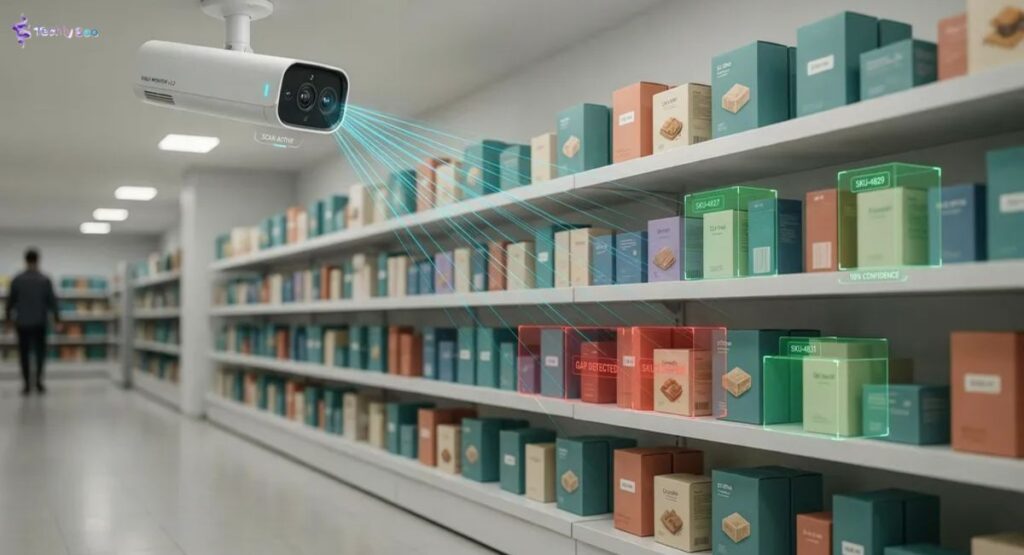
Retail AI Vision Automation is a system that uses cameras, artificial intelligence, and data analytics to understand what is happening inside a store. It turns video feeds into insights instead of just recordings. This is a key part of retail computer vision technology and computer vision retail applications.
It works like human eyes, but smarter. The system sees products, people, and actions. Then it interprets them using AI models. This creates AI-powered inventory tracking and automated retail intelligence system capabilities that improve decision-making in real time.
How AI Vision Works in Retail Stores
AI vision works in a simple flow. Cameras capture video. Then AI models process it using real-time video processing. Finally, insights are sent to dashboards or alerts. This helps AI-driven store automation run smoothly without human supervision.
For example, if a shelf becomes empty, the system triggers a stockout detection system alert. If too many people gather in one aisle, a queue management system AI response may open another checkout counter.
Core Technologies Behind Retail AI Vision Automation
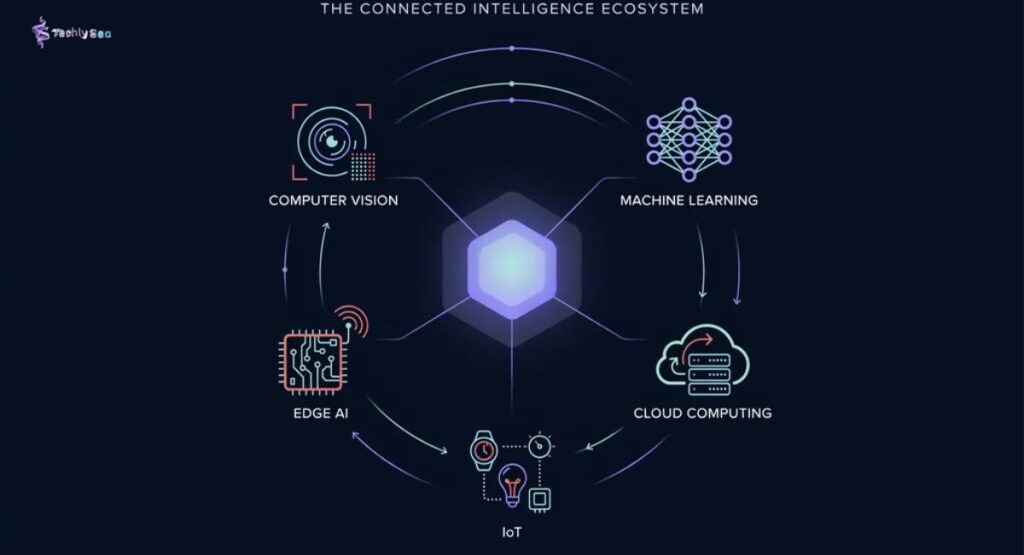
Computer Vision and Image Recognition
Computer vision is the brain of this system. It helps machines understand images like humans. It powers retail analytics using computer vision and retail behavioral analytics AI.
Machine Learning and Deep Learning
Machine learning helps systems improve over time. It learns from AI model training retail data and becomes more accurate in predicting customer behavior and stock issues.
Edge AI, Cloud Computing, and IoT Integration
Edge computing processes data inside the store. Cloud systems handle storage. IoT connects smart devices. Together they form smart retail systems and support edge computing in retail.
Why Retailers Are Adopting AI Vision Automation
Retailers in the USA are under pressure. Costs are rising. Theft is increasing. Customers expect faster service. That is why AI-powered store optimization is becoming important.
Stores also want better control over inventory and staff. With real-time retail analytics system, managers can see what is happening instantly. This improves efficiency and reduces waste across operations.
Top Retail AI Vision Automation Use Cases
Loss Prevention and Shrinkage Reduction
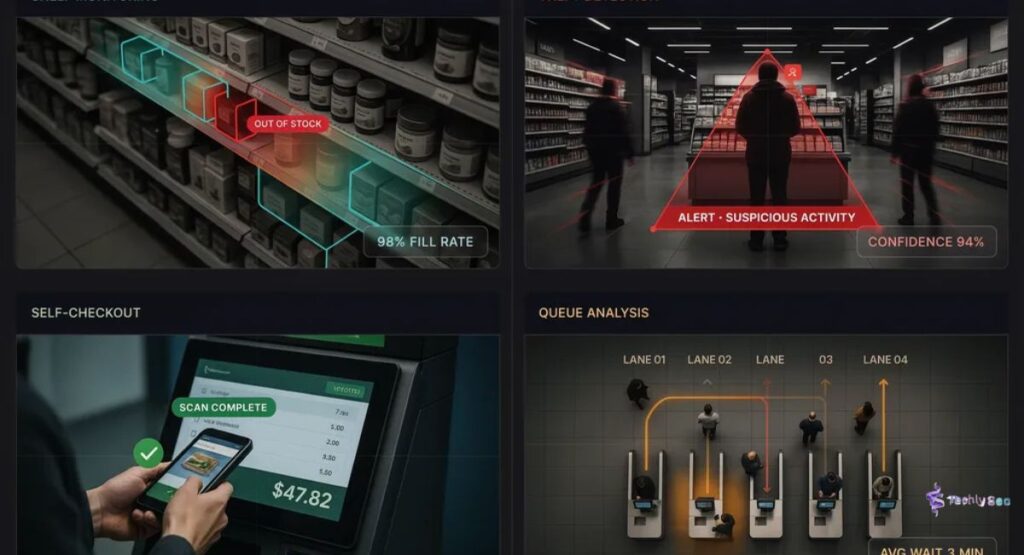
AI detects theft patterns and suspicious movement. It acts as a loss prevention AI system and improves retail shrinkage reduction across stores.
Self-Checkout and Cashierless Stores
AI monitors autonomous checkout lanes. This is part of cashierless store technology and supports autonomous checkout systems.
Shelf Monitoring and Stock Detection
AI tracks shelves in real time. It works as a shelf monitoring system and stock discrepancy detection tool.
Customer Flow and Queue Analysis
AI studies movement patterns. It improves foot traffic analysis retail and reduces waiting time using queue management system AI.
Planogram Compliance
AI checks product placement. It ensures retail planogram compliance and supports retail merchandising compliance.
AI Vision vs Traditional Retail Systems
Traditional CCTV only records video. It does not analyze anything. But retail AI vision automation understands what is happening.
| Feature | CCTV Systems | AI Vision Systems |
| Real-time alerts | No | Yes |
| Inventory tracking | No | Yes |
| Theft detection | Manual | Automated |
| Analytics | Limited | Advanced |
This difference shows why AI-based loss prevention system is replacing old surveillance tools.
Key Benefits of Retail AI Vision Automation
Retailers gain many advantages from AI retail technology solutions. It improves speed, accuracy, and customer experience across stores.
It also strengthens retail customer experience AI by reducing delays and improving product availability. Stores become more responsive and intelligent in daily operations.
Retail AI Vision Automation Statistics and Market Trends
The US retail AI market is growing fast. Reports show that AI-based systems reduce shrinkage by up to 30% and improve inventory accuracy by over 40%. This supports AI retail transformation across major retail chains.
| Metric | Improvement |
| Inventory accuracy | +40% |
| Theft reduction | -30% |
| Checkout speed | +25% |
| Customer satisfaction | +35% |
Measuring ROI: Cost-Benefit Analysis
Retailers invest heavily in automation, but returns are strong. A proper retail AI ROI analysis shows savings in labor, stock loss, and operational delays.
A simple cost-benefit analysis retail automation model shows that most stores recover investment within 12–18 months due to reduced losses and better efficiency.
How to Implement Retail AI Vision Automation
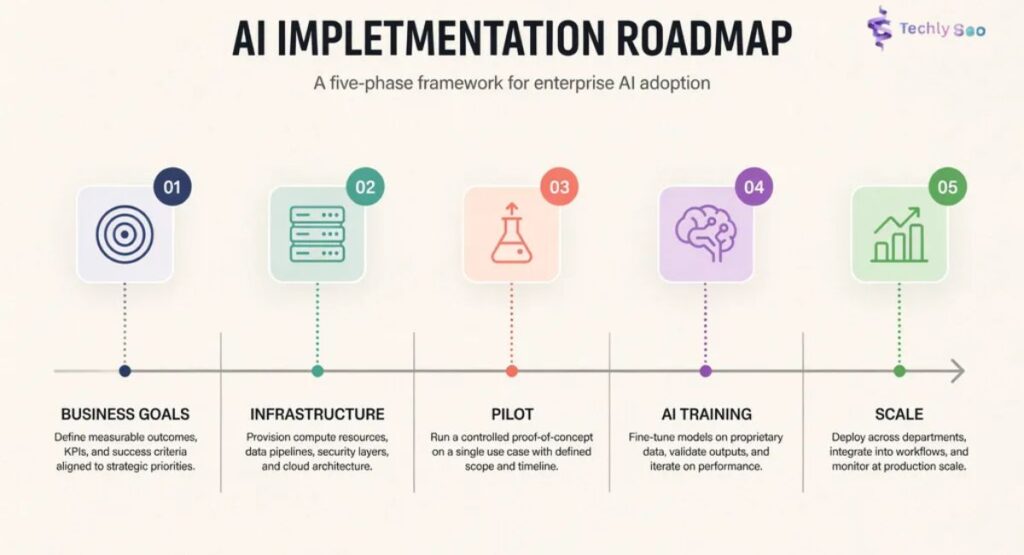
Define Business Goals
Stores must first decide what they want. It could be theft prevention or better inventory tracking.
Check Infrastructure
Existing cameras and systems must support real-time retail analytics system.
Run Pilot Project
Start small. Test in one store before scaling.
Train AI Models
Use AI model training retail data to improve accuracy.
Scale Across Stores
Expand slowly and monitor results using dashboards.
Common Challenges in Deployment
Privacy is a major concern. Retailers must follow retail data privacy AI rules and ensure privacy-first AI systems retail practices.
Other challenges include poor camera placement, system integration issues, and staff resistance. Some AI models may also create false alerts if not trained properly.
Best Practices for Retail AI Systems
Success depends on planning. Good camera placement improves accuracy. Clean data improves predictions. Strong integration improves performance.
Retailers should also focus on retail operational intelligence and continuous improvement to maximize results from AI-powered retail monitoring systems.
Choosing the Right AI Platform
Retailers should choose systems that support scalability, cloud integration, and edge processing. A strong platform enables next generation retail automation and improves store intelligence.
It should also support retail digital transformation and integrate with POS and ERP systems easily.
Future of Retail AI Vision Automation
The future is fully automated stores. Shops will predict demand before shelves go empty. AI will guide customers through stores. This is the rise of future of retail automation and AI retail transformation.
We will also see smarter in-store customer journey tracking and hyper-personalized shopping experiences powered by AI.
Conclusion: Smarter Stores with AI Vision
Retail AI Vision Automation is not just a tool. It is a complete shift in how stores operate. It connects inventory, customers, and staff into one intelligent system.
With AI-powered store optimization, retailers can reduce losses, improve service, and make smarter decisions. The future of retail belongs to stores that think, learn, and adapt in real time.
FAQs
What is Retail AI Vision Automation used for?
It is used for monitoring shelves, tracking customers, reducing shrinkage, and improving store operations using AI-powered systems.
Is it better than traditional CCTV?
Yes. It provides insights instead of just recording video.
Does it improve inventory accuracy?
Yes, through automated inventory tracking and real-time monitoring.
Is it expensive for small retailers?
Not necessarily. Cloud-based systems allow gradual adoption.
Does it require internet all the time?
Edge AI systems can function offline and sync later.