
Introduction to AI in Marketing Forecasting
AI in marketing forecasting is changing how businesses predict demand, customer behavior, campaign performance, and future market trends. Instead of relying only on last quarter’s sales or campaign reports, marketers can use AI models to analyze customer behavior, sales patterns, search activity, campaign performance, and other signals to estimate what may happen next.
AI in marketing forecasting can help businesses predict demand, identify emerging trends, estimate campaign performance, allocate budgets, and understand how customer behavior may change. Machine learning models can process larger and more complex datasets than traditional forecasting methods, but the quality of their predictions still depends on reliable data, appropriate models, and regular validation.
In this guide, you’ll learn how AI marketing forecasting works, where businesses use it, its main benefits and limitations, and how forecasting technologies may shape marketing strategy in the future.
What Makes AI in Marketing Forecasting Different from Traditional Methods
AI works faster and smarter because of pattern recognition and machine learning in marketing. It studies behavioral patterns and gives real time insights, which help you act before your competitors.
The Evolution of Marketing Forecasting
In the past, marketing teams relied on experience and basic reports. There are now AI marketing forecasting models that use forecasting models in sales and marketing models to get more accurate results. This shift allows businesses to move from guesswork to smart planning.
Modern forecasting uses model training and validation and strong data pipelines. These systems process large datasets and provide probability ranges instead of single answers. This helps you prepare for multiple outcomes using scenario planning.
How AI in Marketing Forecasting Works
AI marketing forecasting works by turning historical and real-time marketing data into predictions that businesses can use for planning. The process usually includes data collection, preparation, model training, forecasting, and continuous monitoring.
1. Data Collection
The first step is collecting relevant marketing data. This may include website traffic, CRM records, sales history, advertising performance, customer interactions, search trends, email engagement, and social media activity. Using multiple data sources helps create a more complete view of customer and market behavior.
2. Data Preparation
Raw data often contains missing values, duplicate records, or inconsistent information. Before an AI model can make reliable predictions, the data must be cleaned and organized. Good data quality is important because inaccurate or incomplete data can lead to poor forecasts.
3. Selecting Important Variables
AI models identify the factors that are most useful for predicting future outcomes. For example, a sales forecast may consider previous sales, seasonality, advertising spend, customer demand, and changes in website traffic. Choosing relevant variables helps the model focus on the signals that matter most.
4. Model Training and Validation
Machine learning models are trained using historical data so they can recognize patterns and relationships. The model is then tested against data it has not previously seen. This validation process helps marketers understand how accurately the model may perform before using its predictions for business decisions.
5. Forecasting and Continuous Monitoring
Once the model is ready, it can generate forecasts for outcomes such as sales, customer demand, campaign performance, or market trends. Businesses should compare these forecasts with actual results and regularly update the model as new data becomes available. Continuous monitoring helps keep predictions relevant as customer behavior and market conditions change.
How AI Finds Market Trends Early
Artificial intelligence helps find trends before they become popular. It looks at a lot of data very fast. The system reads search queries, reviews, and social media posts. This is done with natural language processing.
This process supports marketing trend prediction. It gives early signs of what people like. These signs are called predictive signals.
AI also uses time series algorithms. These study patterns over time. They use past and current data together. This improves forecasting accuracy.
With real time insights, you can act quickly. You can adjust your plan before the trend grows big. This is called data driven forecasting and it gives you an edge.
Understanding Consumer Behavior with AI
AI makes consumer behavior analysis simple. It studies how people act, not just who they are.
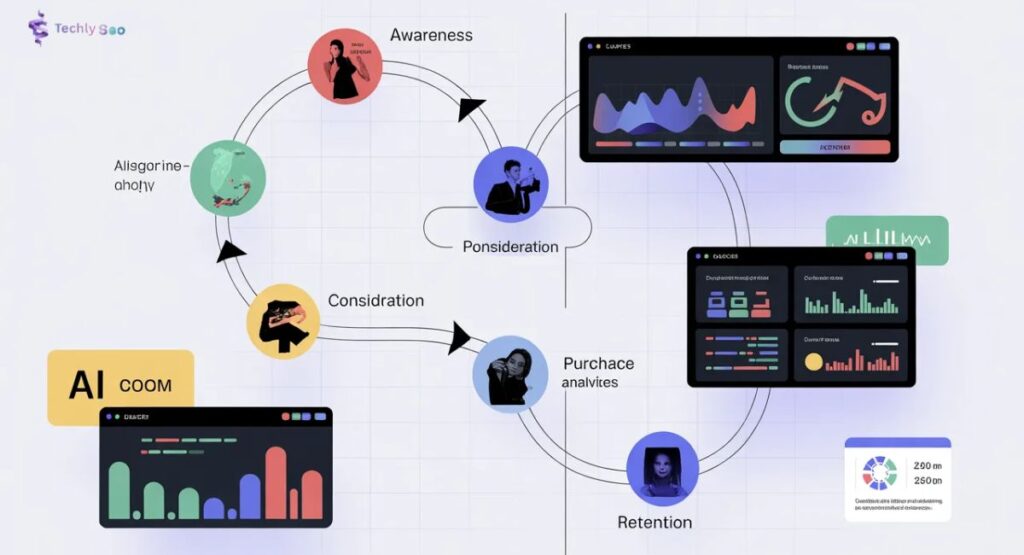
It uses customer journey analysis to track each step a user takes. It also uses clustering algorithms. These group users by actions and behavioral patterns.
This system also studies emotions. It uses sentiment analysis and sequence models. This helps understand how people feel and react.
With this, you can improve personalization and customer segmentation. You are able to talk with the correct person. This makes your marketing stronger.
Key Uses of AI in Marketing Forecasting
AI marketing forecasting can support several important business decisions. Instead of using one model for every purpose, companies can apply different forecasting methods depending on whether they want to predict demand, sales, customer behavior, or campaign performance.
Demand Forecasting
Businesses can use AI to estimate future demand by analyzing historical sales, seasonality, customer behavior, promotions, and changing market conditions. More accurate demand forecasts can help companies manage inventory, prepare for seasonal peaks, and reduce the risk of overstocking or running out of products. Predictive analytics is also used in operational planning, including AI-powered supply chains, where forecasting can support inventory and demand decisions.
Sales Forecasting
AI-powered sales forecasting uses previous sales results, lead activity, customer interactions, and market data to estimate future revenue. Sales and marketing teams can use these forecasts to set more realistic targets, plan budgets, and identify periods when additional promotional activity may be needed.
Campaign Performance Forecasting
Before or during a marketing campaign, AI models can analyze previous campaign results, audience behavior, ad spend, engagement rates, and conversion data. This can help marketers estimate likely campaign outcomes and adjust their budget or targeting before too much money is spent on underperforming activities.
Customer Churn Prediction
AI can identify behavioral patterns that may indicate a customer is likely to stop buying from a business or cancel a service. For example, lower engagement, fewer purchases, or changes in product usage may become early warning signals. Marketing teams can use these predictions to create retention campaigns for customers who may be at risk.
Customer Lifetime Value Forecasting
AI can also estimate the future value of customer relationships. By analyzing purchase frequency, average order value, engagement, and retention patterns, businesses can identify customers who may generate greater long-term value. This information can support smarter decisions about acquisition and retention spending.
Market Trend Forecasting
Marketing teams can analyze search activity, customer reviews, social conversations, sales patterns, and other signals to identify emerging changes in customer interest. While AI cannot predict every market shift, it can help businesses detect patterns earlier and test their strategies before competitors react.
| Forecasting Application | Data AI May Analyze | Business Benefit |
|---|---|---|
| Demand Forecasting | Sales history, seasonality, promotions | Better inventory and demand planning |
| Sales Forecasting | Sales records, leads, customer activity | More realistic revenue planning |
| Campaign Forecasting | Ad spend, clicks, conversions, engagement | Better campaign and budget decisions |
| Churn Prediction | Customer activity and engagement patterns | Earlier customer retention actions |
| Customer Lifetime Value | Purchases, retention, order value | Smarter acquisition and retention spending |
| Market Trend Forecasting | Search trends, reviews, social and sales data | Earlier identification of changing demand |
Practical Examples of AI in Marketing Forecasting
AI forecasting becomes easier to understand when you look at how it can support everyday marketing decisions. The following examples show how businesses can use forecasting models in different situations.
E-commerce Demand Planning
An online retailer can analyze previous sales, seasonal demand, website traffic, promotions, and customer search activity to estimate which products may sell more in the coming weeks. If the model predicts higher demand for a particular product category, the business can adjust inventory and marketing campaigns before demand increases.
Advertising Budget Planning
A marketing team can use historical campaign data to estimate how different levels of advertising spend may affect clicks, conversions, and revenue. Instead of dividing the budget equally across campaigns, marketers can direct more resources toward channels that are forecast to produce stronger results.
Customer Retention
A subscription-based business can analyze changes in customer activity, login frequency, purchases, support requests, and engagement. AI may identify customers whose behavior suggests a higher risk of leaving. The marketing team can then target those customers with retention offers, personalized messages, or additional support.
Seasonal Campaign Forecasting
A retailer preparing for a major shopping season can combine previous seasonal sales, current website activity, search trends, and campaign results. AI forecasting can help estimate when demand may begin increasing and which products or promotions deserve the most attention.
Product Launch Planning
Before launching a new product, a company can analyze customer interest, historical launches, audience engagement, search behavior, and early campaign data. These signals can help marketers estimate demand and adjust advertising, pricing, or audience targeting as more information becomes available.
These examples show that AI forecasting does not replace marketing judgment. Instead, it provides additional evidence that marketers can use alongside business experience, customer research, and changing market conditions.
How AI Improves Marketing Strategy
AI can improve marketing strategy by helping teams make decisions using patterns found in customer, campaign, sales, and market data. Instead of relying only on past reports or intuition, marketers can use forecasting insights to plan budgets, audiences, timing, and campaign priorities more effectively.
Better Budget Allocation
Forecasting models can compare historical campaign performance, customer acquisition costs, conversion rates, and channel results. This helps marketing teams identify where additional spending may produce better returns and where budgets may need to be reduced.
Smarter Audience Planning
AI can analyze customer behavior, purchase history, engagement, and demographic data to identify patterns between different audience groups. These insights can help marketers prioritize segments that are more likely to respond to a campaign or generate long-term value.
Improved Campaign Timing
Marketing performance often changes depending on seasonality, customer demand, events, and buying patterns. AI forecasting can help teams identify periods when interest may rise or fall, making it easier to plan campaigns at more appropriate times.
Faster Strategic Decisions
Traditional reporting often explains what has already happened. Forecasting adds another layer by estimating what may happen next. Marketers can use these predictions to compare possible scenarios and make decisions earlier.
Continuous Strategy Optimization
AI-powered forecasting should not be treated as a one-time activity. As new campaign and customer data becomes available, marketers can compare forecasts with actual results and refine their models and strategies. This continuous feedback process can improve decision-making over time.
AI does not remove the need for human judgment. Forecasts work best when marketers combine model outputs with business knowledge, customer research, competitive information, and an understanding of current market conditions.
AI and Daily Marketing Work
AI forecasting can support everyday marketing work by helping teams prioritize tasks, use marketing automation workflows for repetitive processes, and react faster to changes in campaign performance or customer behavior.
Campaign Monitoring
AI tools can monitor campaign metrics such as clicks, conversions, engagement, cost per acquisition, and revenue. Forecasting models can also identify unusual changes and help marketers understand whether current performance is likely to continue.
Email and Customer Communication
Marketing automation platforms can use customer behavior and engagement data to determine when messages should be sent and which audiences may be more likely to respond. Forecasting can also help teams identify customers who may need additional communication or retention support.
Advertising Optimization
AI can analyze historical and current advertising performance to help marketers adjust targeting, bids, creative priorities, and budgets. Forecasting models can provide estimates of how different decisions may affect future campaign results.
Lead and Customer Prioritization
Sales and marketing teams can use predictive models to identify leads or customers who may be more likely to convert, purchase again, or disengage. This allows teams to focus their time and resources on the audiences that may require the most attention.
Reporting and Planning
AI can reduce the time spent reviewing large amounts of marketing data by identifying important patterns and changes. Marketers can use these insights alongside dashboards and reports to plan upcoming campaigns, budgets, and customer strategies.
The goal of AI in daily marketing work is not to automate every decision. It works best when automation handles repetitive analysis while marketers remain responsible for strategy, creative decisions, customer understanding, and final judgment.

Challenges and Risks of AI
AI can make marketing forecasting faster and more useful, but its predictions are not automatically accurate. The quality of a forecast depends on the data, the model, and how carefully businesses interpret the results.
Data Quality Problems
AI models rely heavily on the information used to train them. Missing records, outdated customer data, duplicate information, or incorrect tracking can reduce forecasting accuracy. Businesses should regularly review and clean their data before using it for important marketing decisions.
Bias in AI Models
If historical data contains bias, an AI model may repeat or strengthen those patterns. This can affect audience targeting, customer segmentation, and other marketing decisions. Teams should test model outputs and check whether certain customer groups are being treated unfairly.
Privacy and Data Governance
Marketing forecasting may use customer behavior, purchase history, location data, or other personal information. Businesses need clear data governance practices and should ensure that customer information is collected and used according to applicable privacy requirements. Teams that want to build stronger governance knowledge can also learn more through our AI governance certification guide.
Lack of Explainability
Some advanced AI models can produce accurate predictions without making it obvious why a specific result was generated. This can make it difficult for marketers and managers to trust or evaluate forecasts. Explainable AI methods can help teams understand which factors influence a prediction.
Changing Market Conditions
Forecasting models learn from existing patterns, but unexpected events can quickly change customer behavior. Economic changes, new competitors, platform updates, or major cultural events may reduce the usefulness of historical patterns. For this reason, forecasts should be reviewed regularly rather than treated as permanent answers.
Over-Reliance on Automation
AI should support marketing decisions rather than replace human judgment. Marketers still need to consider brand strategy, customer feedback, business goals, and market context before acting on a forecast.
The most reliable approach is to combine AI-generated predictions with human review, continuous testing, and strong data governance.
Organizations developing or using AI can also refer to the NIST AI Risk Management Framework for guidance on managing AI-related risks and improving trustworthy and responsible AI practices.
Future of AI in Marketing Forecasting
AI marketing forecasting is moving toward faster, more adaptive, and more integrated decision-making. Instead of producing forecasts only from historical reports, future systems will increasingly combine current customer behavior, campaign performance, sales data, and market signals to update predictions as conditions change.
More Real-Time and Adaptive Forecasting
Traditional forecasts may be updated monthly or quarterly, but AI makes it possible to analyze new information much more frequently. As fresh campaign, sales, and customer data becomes available, forecasting models can adjust their predictions and help marketers respond more quickly to changing demand.
Greater Use of Predictive Customer Metrics
Marketing platforms are increasingly using machine learning to estimate future customer behavior. Predictive metrics can help businesses identify customers who may be likely to purchase, generate higher future revenue, or stop engaging with a brand. For example, Google Analytics predictive metrics can estimate purchase probability, churn probability, and predicted revenue for eligible properties.
As these capabilities improve, marketers may use predictive insights more frequently when planning audiences, retention campaigns, customer acquisition, and budget allocation.
Stronger Focus on First-Party Data
As privacy expectations and tracking technologies continue to change, first-party data will become increasingly important for marketing forecasting. Information collected directly through websites, apps, CRM systems, purchases, subscriptions, and customer interactions can provide businesses with a more reliable foundation for predictive analysis.
Companies that maintain accurate, consented, and well-organized first-party data are likely to be better positioned to use AI forecasting effectively.
Scenario-Based Marketing Planning
Future forecasting systems will increasingly help marketers compare multiple possible outcomes rather than relying on a single prediction. For example, a marketing team may evaluate how different advertising budgets, channel combinations, or demand levels could affect future revenue.
Scenario forecasting can help decision-makers understand both potential opportunities and risks before committing significant resources.
Better Cross-Channel Measurement
Marketing data often comes from several sources, including search, social media, email, paid advertising, websites, and offline sales. AI-supported measurement systems are becoming better at combining these signals to provide a broader view of marketing performance.
This can help businesses understand how different marketing activities contribute to future outcomes and make more informed decisions about where to invest.
Human Oversight Will Remain Important
More advanced AI does not mean marketers can completely automate forecasting decisions. Models can still be affected by poor data, unexpected market changes, bias, and incorrect assumptions.
Human judgment will remain essential for interpreting forecasts, testing recommendations, considering business context, and deciding when an AI-generated prediction should or should not influence strategy.
The future of AI in marketing forecasting will therefore depend on combining stronger predictive technology with high-quality data, responsible use, continuous testing, and experienced human decision-making.
Conclusion
AI in marketing forecasting helps businesses make better decisions by turning historical and current data into useful predictions. It can support demand planning, sales forecasting, campaign optimization, customer retention, budget allocation, and market trend analysis.
However, AI forecasts are only as reliable as the data, models, and processes behind them. Businesses should regularly validate predictions, monitor changing market conditions, protect customer data, and combine AI insights with human judgment.
As forecasting technology becomes more advanced, marketers who build strong data practices and use AI responsibly will be better positioned to react quickly, test strategies, and plan for future opportunities.
Frequently Asked Questions
What is AI in marketing forecasting?
AI in marketing forecasting uses artificial intelligence and machine learning to analyze marketing data and estimate future outcomes such as sales, demand, campaign performance, and customer behavior.
How accurate is AI marketing forecasting?
Accuracy depends on factors such as data quality, the forecasting model, market stability, and how regularly the system is updated. AI can improve forecasting, but no model can guarantee completely accurate predictions.
What data is used for AI marketing forecasting?
Businesses may use sales records, website analytics, CRM data, advertising performance, customer behavior, search trends, engagement data, and other relevant market information.
Can small businesses use AI for marketing forecasting?
Yes. Small businesses can use analytics, CRM, advertising, and marketing automation platforms that include predictive or AI-based features without building their own advanced forecasting models. Businesses that need additional guidance can also explore AI consulting for small businesses when choosing tools, data strategies, or implementation methods.
Does AI replace marketers in forecasting?
No. AI helps analyze data and generate predictions, but marketers still need to interpret results, understand business context, evaluate risks, and make final strategic decisions.
Top of Form
Bottom of Form