
Google Ads for Doctors SEO Outline gives medical practices a clear plan to attract more patients through paid and organic search. Instead of wasting money on random clicks, doctors can target people who are actively searching for treatments, specialists, or nearby clinics.
A strong strategy combines Google Ads for doctors, doctor SEO, and patient acquisition to improve visibility and generate qualified appointment requests. It also covers keyword research, campaign structure, landing pages, budgeting, and tracking. When you connect paid ads with local SEO for doctors and medical practice SEO, you create a smarter marketing system that supports steady growth and better results.
What Is a Google Ads for Doctors SEO Outline?
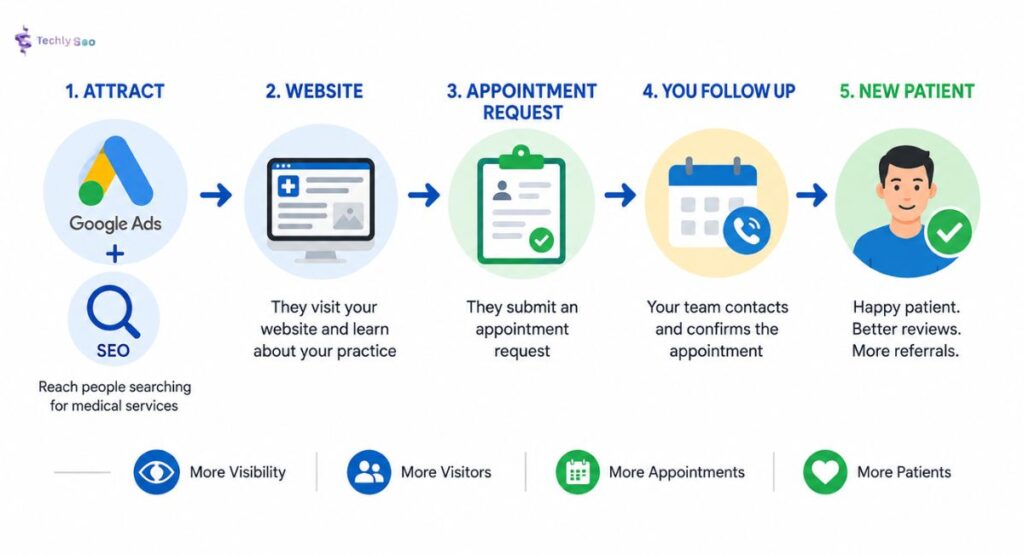
A Google Ads for Doctors SEO Outline is a structured plan for combining PPC for doctors, medical Google Ads, and medical practice SEO. It connects paid advertising with patient acquisition, website content, local pages, and organic search. Instead of viewing ads as isolated traffic sources, you build them around real patient search intent and the complete patient journey from search to appointment.
Think of it as the bridge between paid search for doctors and healthcare marketing. Ads can create immediate visibility, while SEO can build long-term authority. The useful part is the data connection. Search terms that produce qualified appointments can guide future content. Organic pages that already attract patients can also reveal themes worth testing through paid ads. This makes your marketing system smarter over time rather than simply more expensive.
| Strategy Area | Main Purpose | What You Measure |
| Paid search | Reach ready-to-act patients | Leads, calls, appointments |
| SEO | Build lasting search visibility | Rankings, organic traffic, conversions |
| Landing pages | Turn visits into actions | Conversion rate, calls, forms |
| Local SEO | Reach nearby patients | Maps visibility, local leads |
| Tracking | Connect marketing to outcomes | Qualified leads and appointments |
Why Google Ads Work for Doctors and Medical Practices
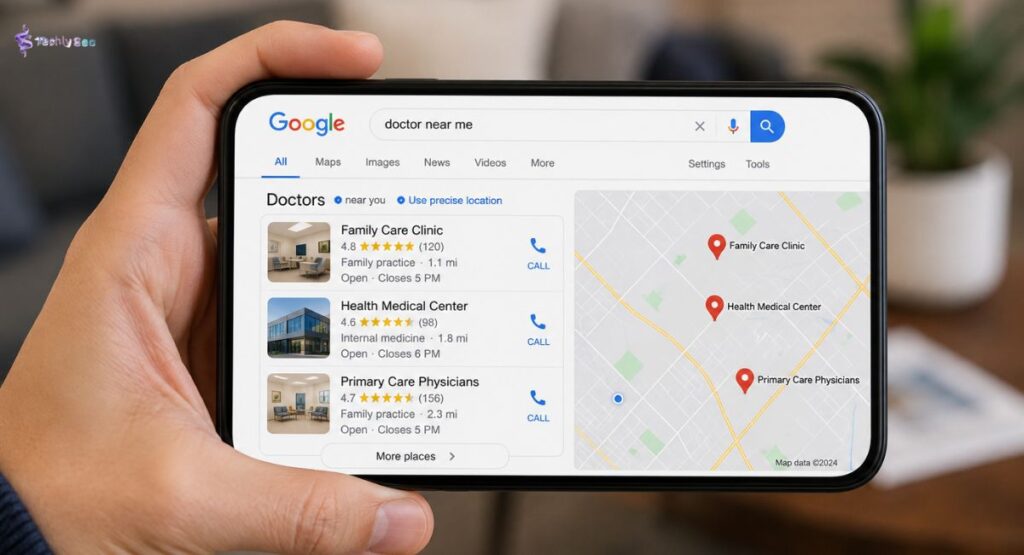
Google Ads can work well because patients often search when a medical need already exists. Searches built around high-intent keywords such as doctor near me, cardiologist near me, dermatologist near me, or orthopedic surgeon can carry stronger transactional intent than broad educational queries. A person searching for symptoms may still be researching. Someone searching for a specialist nearby may be much closer to making an appointment.
That difference matters. Strong medical advertising focuses on the moment when need and availability meet. Search advertising can provide fast visibility while geographic controls help practices focus on realistic service areas. Still, an ad click isn’t a patient. Your website, reputation, availability, insurance information, and scheduling process all shape what happens next. Effective patient acquisition therefore measures downstream quality, not just traffic.
How to Build a Google Ads Strategy for Doctors
Start the Google Ads for Doctors SEO Outline with revenue-aligned objectives. Decide what a useful conversion really means. A call lasting ten seconds isn’t equal to a new patient appointment. A form from someone outside your service area may also have little value. Define your target around patient bookings, appointment leads, and ultimately qualified patient leads. Then connect those outcomes with your acquisition cost and patient lifetime value.
Next, organize the strategy around services and capacity. A cardiology group may want more new-patient consultations while an orthopedic clinic may focus on specific procedures. This is where specialty targeting, patient lead generation, and realistic appointment availability matter. If one provider is already fully booked, sending more traffic there creates frustration. Good advertising supports medical practice growth by matching demand with services your practice can actually deliver.
A Simple Patient Acquisition Model
| Stage | Example Action | Useful Metric |
| Search | Patient searches for specialist | Search volume and intent |
| Ad click | Patient visits relevant page | CTR and CPC |
| Inquiry | Patient calls or submits form | CPL |
| Qualification | Practice confirms fit | Qualified lead rate |
| Appointment | Patient books | Cost per booked appointment |
| Visit | Patient attends | Patient acquisition cost |
Keyword Research for Google Ads for Doctors
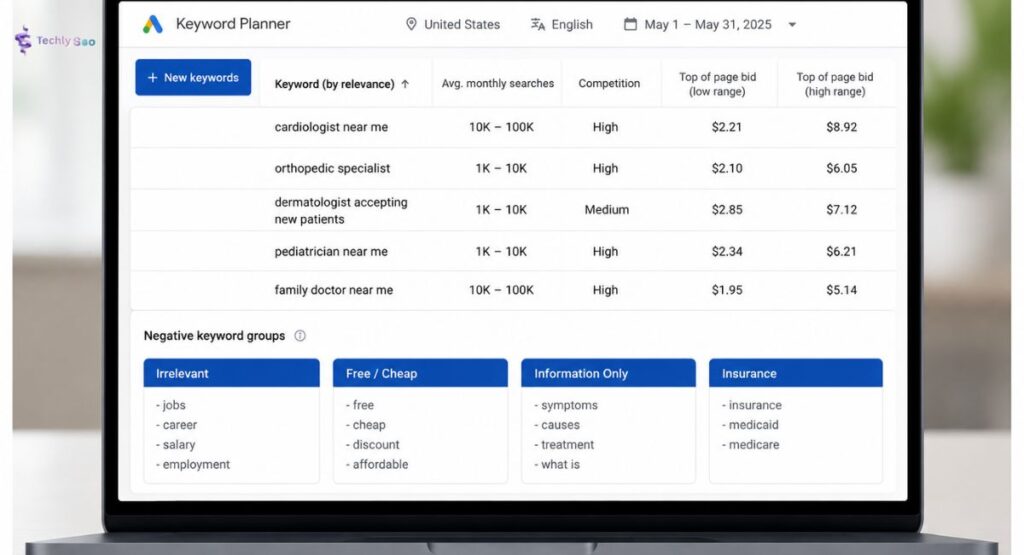
Strong campaigns start with the right medical keywords. Don’t simply collect every phrase related to your specialty. Build keyword mapping around services, conditions, urgency, and location. Location-modified keywords such as “sports medicine doctor Austin” may show clearer intent than generic phrases. At the same time, study healthcare search intent. “What causes knee pain?” and “knee doctor near me” may contain similar words, yet they represent very different stages of the decision process.
You also need negative keywords and sensible keyword match types. Negative terms can reduce unrelated searches for careers, education, definitions, veterinary care, or services your clinic doesn’t provide. Match types control how closely a search needs to relate to your chosen keyword. Google continues to evolve matching behavior, so don’t rely on keyword settings alone. Review actual search terms and judge them by appointment quality.
| Keyword Type | Example | Likely Intent |
| Specialty | cardiologist near me | High |
| Treatment | knee replacement specialist Dallas | High |
| Availability | dermatologist accepting new patients | High |
| Condition | doctor for chronic knee pain | Medium to high |
| Educational | what causes knee pain | Lower commercial intent |
| Brand | clinic or doctor name | Navigational |
How to Structure Google Ads Campaigns and Ad Groups
Organize Campaigns by Services and Specialties
Good campaign structure makes your Google Ads campaigns easier to control. Separate major services, locations, or specialties rather than mixing everything together. Your medical PPC campaigns may include search campaigns, brand campaigns, service campaigns, and carefully planned condition-based campaigns. Inside them, create focused ad groups or specialty-specific ad groups that keep searches, ads, and landing pages closely connected.
Use Location Targeting Effectively
Location deserves the same discipline. Use location targeting, geo-targeting, geo-fencing, and appropriate location exclusions to reduce wasted clicks outside your practical service area. Google provides geographic reporting so advertisers can analyze performance at detailed location levels where data is available. (Google Support) Performance Max and remarketing may support some strategies, but Search should remain tightly tied to intent when appointment demand is the primary goal. Google Maps visibility can also connect with Search advertising when location assets and eligible campaign types are used. (Google Support)
| Campaign | Example Ad Group | Landing Page |
| Orthopedics | Knee specialist | Knee care page |
| Orthopedics | Hip specialist | Hip treatment page |
| Dermatology | Acne treatment | Acne care page |
| Cardiology | New patient cardiology | Cardiology appointment page |
| Brand | Practice name | Main practice page |
How to Create Google Ads That Convert Patients
Good ad copy optimization begins with relevance. Tell the patient what you offer, where you’re located, and what action they can take. Use accurate doctor credentials, meaningful trust signals, and phrases such as board-certified doctor only when they are factually correct. Then strengthen the ad with suitable ad extensions, now commonly called assets, plus structured snippets and callouts. Your goal isn’t to sound dramatic. It’s to make the next step clear.
Watch your click-through rate, but don’t treat it as the only sign of success. A highly clickable ad can still bring poor leads. Medical advertisers also need strong healthcare compliance and medical advertising compliance. Google restricts or requires certification for certain healthcare categories, including some prescription drug services and other regulated areas. Avoid unsupported claims, misleading guarantees, and aggressive language. Clear, credible messaging usually serves both patients and campaign quality better.
“A higher Quality Score means that your ad and landing page are more relevant and useful…” — Google Ads Help.
Landing Page Optimization for Doctors
Strong landing page optimization starts with one simple rule: match the page to the ad. Your medical landing pages and healthcare landing pages should not force every visitor through a general homepage. A knee-specialist ad deserves a dedicated landing page about knee care. That creates stronger message match between keyword, ad, and destination. Google says landing-page experience contributes to Quality Score, along with expected CTR and ad relevance.
Make the page easy to use. A visible appointment CTA, authentic patient reviews, and a mobile-first landing page can remove unnecessary friction. Keep page speed strong because mobile healthcare searches often happen when patients want quick answers. Explain the service clearly. Show location and contact details. Mention insurance only when accurate. Use short forms. Most importantly, track the final conversion rate instead of assuming a polished design will automatically produce appointments.
Google Ads Budgeting, Bidding, and ROI for Doctors
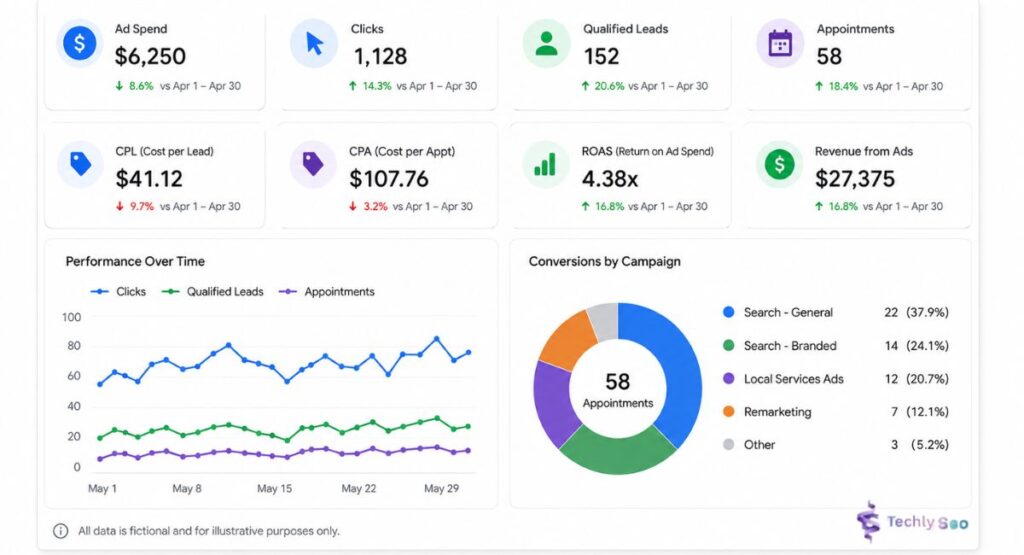
A Google Ads budget should come from business economics, not a random monthly number. Start with expected healthcare CPC, average cost per click, estimated cost per lead, and the percentage of leads that become patients. Then compare CPA, CPL, and ROAS with your medical practice budget, monthly ad spend, and expected bookings. A $40 lead isn’t necessarily expensive if qualified leads often become valuable long-term patients.
Bidding also needs context. Google Smart Bidding uses auction-time signals to optimize toward conversion goals. Smart Bidding, Target CPA, and Maximize Conversions can work well when conversion data reflects meaningful outcomes. Google updated the Search interface in June 2026 so Target CPA and Target ROAS appear separately from Maximize Conversions and Maximize Conversion Value. Focus your conversion-focused bidding on real business value. That gives you a clearer view of Google Ads ROI and return on ad spend.
Illustrative Budget Example
The following example is hypothetical. It shows the math rather than promising a result.
| Metric | Example |
| Monthly clicks | 400 |
| Average CPC | $8 |
| Ad spend | $3,200 |
| Website conversion rate | 10% |
| Leads | 40 |
| Cost per lead | $80 |
| Qualified leads | 24 |
| Booked appointments | 16 |
| Cost per booked appointment | $200 |
This table shows why patient lifetime value matters. If the practice only watches CPL, it misses what happens after the lead enters the scheduling process.
Conversion Tracking and Google Ads Optimization
Without strong conversion tracking, campaigns learn from incomplete signals. Use Google Tag Manager, Google Analytics 4, and Google Ads conversion actions to measure form submissions, phone-call conversions, and online bookings where appropriate. Add call tracking and appointment tracking when they can be implemented without exposing sensitive information. Google allows Analytics key events to be used for Google Ads conversions.
The next level is connecting leads with real outcomes. Offline conversions can show what happened after an ad click or phone call, such as a qualified appointment. Google supports offline conversion imports and GCLID tracking for suitable workflows. Use search term analysis, campaign optimization, and A/B testing to improve quality over time. Review cross-device tracking carefully too. For HIPAA-regulated organizations, tracking design must consider patient privacy rather than sending sensitive data into advertising systems. HHS provides specific guidance on online tracking technologies.
Local SEO and Google Business Profile Support for Google Ads
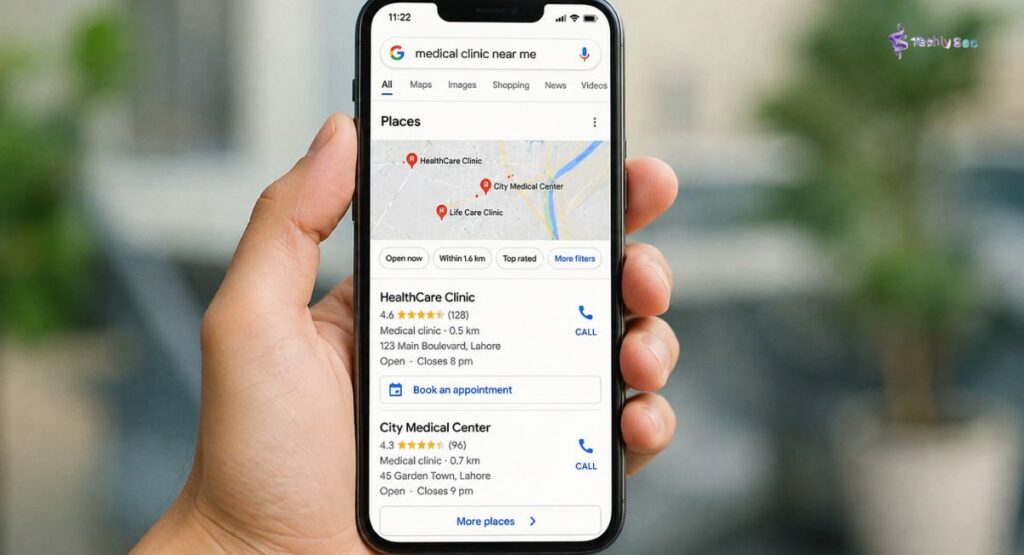
Local SEO for doctors strengthens the area around your paid campaigns. A complete Google Business Profile can improve local visibility, Maps visibility, and discovery through local search. Keep NAP consistency accurate. Choose appropriate practice categories, maintain correct hours, add relevant medical services, and use clear appointment links. Google requires businesses to represent their real-world identity accurately in Business Profiles. (Google Support) Genuine reviews can strengthen local trust signals, while incentivized or manipulated reviews violate Google Maps policies.
Technical SEO can add another layer. Accurate medical schema markup helps machines understand entities and relationships. Depending on the site, Schema.org includes terms such as Physician schema, MedicalOrganization schema, MedicalBusiness schema, HealthcareService schema, and MedicalSpecialty schema. However, don’t confuse semantic markup with guaranteed rich results. Google’s supported Search features have their own eligibility rules. Use valid healthcare structured data, accurate entity signals, and visible on-page information. Google’s structured-data guidelines say markup should represent the actual page content. (Google for Developers) Together, these elements can support organic visibility, local pack rankings, and broader medical search visibility.
Common Google Ads Mistakes Doctors Should Avoid
One common mistake is optimizing for clicks instead of patient quality. Weak healthcare campaign management may celebrate traffic even when reception staff keep receiving irrelevant calls. Another problem is poor PPC optimization. Broad searches, weak negatives, oversized service areas, and generic landing pages can damage campaign performance. Review search terms, geography, devices, leads, and impression share with business outcomes in mind.
Privacy mistakes can be more serious. HIPAA compliance isn’t simply a marketing checkbox. HHS states that HIPAA-regulated entities must consider their obligations when online tracking technologies collect or disclose information. (HHS.gov) Don’t send protected health information into advertising or analytics systems without a compliant legal and technical basis. Practices should involve qualified privacy, compliance, or legal professionals when necessary. Better tracking is useful. Unsafe tracking isn’t.
Common Problems and Better Alternatives
| Mistake | Better Approach |
| Targeting every medical keyword | Focus on services and patient intent |
| Using one generic landing page | Build relevant service pages |
| Measuring all calls equally | Track qualified calls |
| Ignoring negative searches | Maintain negative keyword controls |
| Targeting huge areas | Match targeting to patient travel reality |
| Optimizing only for leads | Track appointments and attendance |
| Using sensitive data carelessly | Design privacy-safe measurement |
Google Ads vs SEO for Doctors: Which Strategy Is Better?
The Google Ads for Doctors SEO Outline works because paid and organic channels solve different problems. Ads can capture current demand quickly. SEO builds content and authority that can keep attracting patients without paying for every visit. If a practice wants faster testing, paid search helps. If it wants durable organic visibility, SEO matters. Most established practices eventually benefit from using both rather than forcing an either-or decision.
Outside help may also make sense. A healthcare SEO agency can focus on technical and organic growth. A Google Ads agency for doctors can manage paid campaigns, while a broader medical marketing agency may connect both. Choose based on evidence, reporting quality, privacy understanding, and operational fit. Good partners should explain how clicks become appointments. They should also connect marketing data with medical practice growth, not hide behind impressions and traffic charts.
| Factor | Google Ads | SEO |
| Speed | Faster visibility | Slower build |
| Cost model | Paid traffic | Organic investment |
| Testing | Fast keyword and ad testing | Slower content testing |
| Control | Strong targeting controls | Less direct control |
| Durability | Depends on active spend | Can compound over time |
| Best role | Capture current demand | Build lasting discovery |
Conclusion
A strong Google Ads for Doctors SEO Outline connects every important step. Start with intent. Build the right keywords and campaign structure. Match ads with useful landing pages. Track qualified outcomes. Then combine paid data with SEO, local search, and reputation signals. This creates a system focused on patients rather than vanity metrics.
The real advantage comes from learning. Each search, call, form, appointment, and attended visit adds context. Use that information to improve targeting and content. Over time, stronger PPC optimization and better medical practice SEO can create a more reliable flow of opportunities. That’s a healthier path to growth than simply raising ad spend whenever lead volume slows.
FAQs
How much should doctors spend on Google Ads?
There isn’t one correct monthly ad spend for every practice. Start from expected click costs, conversion rates, appointment capacity, and patient value. A specialist in a competitive metro area may face very different economics from a primary-care clinic in a smaller market. Build the budget backward from qualified appointments rather than copying another clinic’s number.
Are Google Ads effective for medical practices?
Yes, they can be effective when campaigns reach high-intent patients and the practice can convert those searches into appointments. Results depend on search demand, competition, location, landing-page quality, scheduling availability, tracking, and campaign management. Ads create opportunity. They don’t replace a strong patient experience.
What are the best Google Ads keywords for doctors?
The best keywords usually combine specialty, service, location, and action. Terms such as “cardiologist near me” or “dermatologist accepting new patients” can show stronger intent than general health questions. Review actual search terms regularly because the best keyword is one that produces a qualified patient, not simply many clicks.
How long does it take for Google Ads to generate patients?
Ads can begin receiving impressions and clicks soon after an eligible campaign launches. Stable results take longer because the practice needs enough data to understand search quality, conversions, geography, and appointment outcomes. Don’t judge the campaign from the first few clicks. Evaluate patterns and qualified conversions.
Should doctors use Google Ads or SEO?
Use Google Ads when you want to capture active demand quickly. Use SEO when you want stronger long-term discovery and authority. Combining them often works better because paid campaigns reveal converting search themes while SEO can build lasting pages around useful patient needs.
Can doctors advertise medical services on Google?
Many medical services can advertise on Google, but healthcare rules vary by service, product, and location. Certain categories require certification or face restrictions. Google specifically applies additional requirements to areas such as prescription drug services and some other regulated healthcare advertising. Check the latest policy before launching. (Google Support)
How can doctors reduce their Google Ads cost per lead?
Improve relevance before cutting bids. Tighten keywords, remove irrelevant searches, refine geography, improve landing-page message match, and track qualified appointments. Better data also helps automated bidding make more useful decisions. A lower CPL means little if lead quality falls at the same time.
Should a doctor hire a Google Ads agency?
An agency may help when campaigns involve several locations, multiple specialties, complex tracking, large budgets, or poor lead quality. Look for healthcare experience, transparent reporting, privacy awareness, and clear measurement. The right partner should explain how advertising connects with qualified appointments rather than promising rankings, leads, or revenue it can’t guarantee.