
Local SEO keyword research helps you understand what people search for when they need a product or service in a specific area. Instead of targeting broad terms, you can discover local keywords that connect your business with nearby customers. A well-planned local keyword strategy also helps you understand search intent, competition, and location-based demand.
By researching location-specific keywords, you can create pages that match what people want to find in your city or service area. This process can improve your local search visibility, attract more relevant visitors, and help turn local searches into calls, inquiries, bookings, and sales.
What Is Local SEO Keyword Research?
Local SEO keyword research is the process of finding search terms people use to discover products, services, or businesses in a particular location. These searches can include city names, neighborhoods, suburbs, zip codes, or terms such as “near me.” The goal is to understand both the service and its geographic intent.
Local searches don’t always mention a place. A person searching “emergency dentist” may expect nearby results even without adding a location. Google can use the searcher’s location and other signals to provide locally relevant results. This means understanding local search intent can be just as important as the specific keywords people use.
What Are Local SEO Keywords?
Local keywords connect a product or service with a geographic area or local need. For example, “roof repair Denver,” “dentist in Tampa,” and “Italian restaurant near me” all show local intent. The first two contain explicit local keywords, while the last example relies more on local context.
Explicit vs. Implicit Local Keywords
Explicit local keywords include a location directly in the search. Implicit local keywords may not mention a place but still suggest that the user wants a nearby option. Understanding both types helps you discover more local keyword variations instead of targeting only obvious city-based phrases.
What Is Local Search Intent?
Local search intent describes what someone wants when they make a location-related search. A person searching “how to fix a leaking faucet” may want information. A person searching for “plumber near me” is more likely to be ready to contact a local service. Your keyword choices should reflect this difference.
Why Is Local SEO Keyword Research Important?
A smart local keyword strategy helps you focus on searches that can bring real business results. Instead of chasing broad terms with national competition, you can target relevant local customers in the geographic areas you actually serve. That focus can make your SEO work more practical and measurable.
Google says local results mainly consider relevance, distance, and prominence. That means keyword research alone won’t guarantee a top position. However, understanding what people search for helps you create pages and business information that better match their needs and improve your local search visibility.
Reach Customers in Your Service Area
Local keyword research helps you connect services with specific locations. A landscaping company may target “lawn care Austin,” while a law firm may focus on “personal injury lawyer Fort Worth.” These phrases tell you where the search happens and what the person needs.
Attract High-Intent Local Customers
Not every search has the same value. Someone searching for “what is dental cleaning” may just be looking for information rather than planning to book an appointment. Someone searching “dentist accepting new patients near me” shows stronger purchase intent. Local SEO should give extra attention to searches that can lead to calls, appointments, and sales.
Improve Local Pack and Organic Visibility
Local searches can produce several result types. These may include traditional organic listings, Google Maps, and the map pack. A well-planned local strategy should consider all of them. Your website and Business Profile should provide consistent business details while reinforcing your local presence.
Turn Search Traffic into Leads
The real goal isn’t simply higher rankings. You want useful actions. Those actions can include phone calls, form submissions, bookings, store visits, direction requests, and other conversions. Track these outcomes so you can see which keywords create business value.
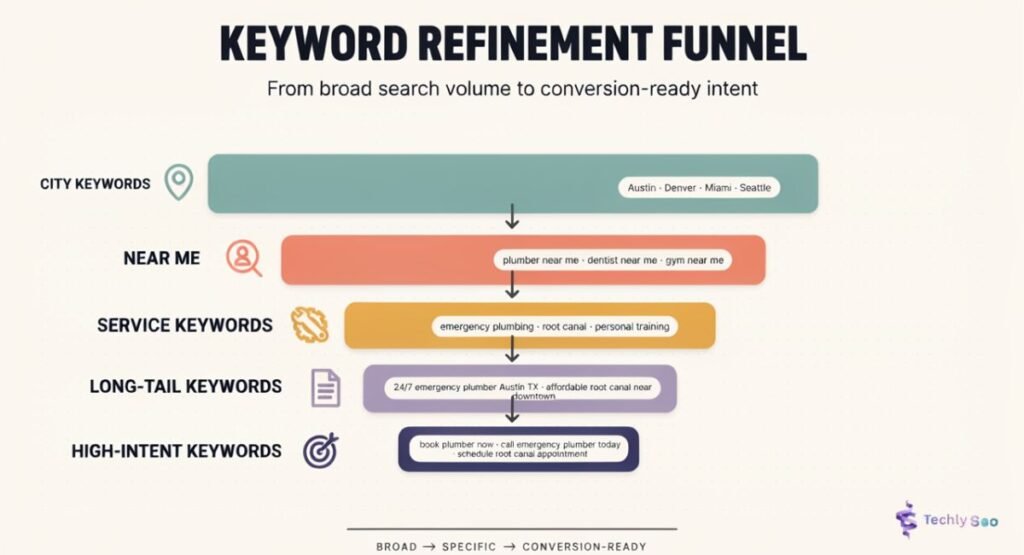
Understand the Different Types of Local Keywords
Local keywords come in many forms. Some clearly name a location. Others describe a problem, service, urgency, or buying stage. A good strategy combines these groups rather than creating dozens of pages around tiny keyword differences. This creates stronger topical coverage and a cleaner website.
You should also consider long-tail keywords because they often describe a very specific need. For example, “24-hour HVAC repair in Phoenix” may have less search volume than “HVAC repair.” However, the longer query can reveal a stronger need and a more specific customer.
City and Location-Based Keywords
Location-specific searches often combine a service with a place. Examples include “plumber Chicago,” “roofing contractor Dallas,” and “family dentist in Orlando.” You can also research location-specific keywords involving neighborhoods, counties, suburbs, and nearby communities that matter to your business.
“Near Me” and Implicit Local Keywords
“Near me” searches are common examples of local intent. Users may search for “coffee shop near me,” “urgent care near me,” or “car repair near me.” Don’t build a page simply to repeat the phrase. Instead, create useful content that clearly explains where you serve and what you offer.
Service-Based Local Keywords
Start with your main services. Then expand each one into specific variations. An HVAC company could research AC repair, furnace repair, duct cleaning, emergency HVAC service, and seasonal maintenance. Each service can reveal different local keyword opportunities and different customer needs.
Local Long-Tail Keywords
Long-tail searches often contain more detail. They may mention a problem, service type, location, price, urgency, or customer requirement. Examples include “same day appliance repair in Columbus” and “affordable family dentist in Scottsdale.” These searches can be valuable because the intent is easier to understand.
Commercial and High-Intent Local Keywords
Commercial searches often include words such as best, top-rated, affordable, professional, nearby, open now, or same-day. These terms can indicate that someone is comparing providers or preparing to contact one. Use them as clues rather than forcing them into every page.
How to Do Local SEO Keyword Research Step by Step
A reliable process starts with your business instead of a keyword tool. First, define your services and locations. Then build seed keywords, expand them, study the results, evaluate intent, and prioritize the strongest opportunities. This prevents your research from becoming a giant spreadsheet with little business value.
Your final list should balance relevance, competition, local search volume, intent, and potential revenue. Don’t automatically choose the keyword with the largest number. A smaller local term can be far more valuable when it reaches someone who needs your service now.
Step 1: Define Your Services and Locations
Write down every important service or product you provide. Then identify the geographic areas you genuinely serve. Include cities, neighborhoods, counties, suburbs, and other service areas where customers can actually hire you. This gives your research a realistic starting point.
Step 2: Create Your Seed Keyword List
Turn your services into basic phrases. For example, a Chicago electrician might start with “electrician Chicago,” “electrical repair Chicago,” and “emergency electrician Chicago.” These seed keywords aren’t your final targets. They are starting points for finding broader keyword themes.
Step 3: Expand Your Keyword Ideas
Expand each seed term using Google suggestions, keyword tools, competitor pages, customer questions, and related searches. Look for different ways people describe the same problem. Someone may search “AC repair,” while another person searches “air conditioner not cooling.”
Step 4: Evaluate Search Volume and Competition
Review search demand without treating it as the only deciding factor. A keyword with 100 searches can be more useful than one with 5,000 searches if the smaller term attracts people ready to hire. Compare relevance, competition, intent, and potential business value.
Step 5: Analyze Local Search Intent
Ask what the searcher expects to find. Would they want a service page, location page, guide, comparison, price explanation, or direct contact option? This step keeps your content aligned with the reason behind the query instead of matching words without understanding the search.
Step 6: Prioritize the Best Local Keywords
Create a simple priority system. High-priority terms should strongly match your service, location, and customer needs. Medium-priority terms can support existing pages. Lower-priority terms can remain in your research database until they become more useful.
Start With Your Own Data and Seed Keywords
Before opening paid keyword research tools, examine the data you already have. Your website may already appear for valuable searches you haven’t deliberately targeted. Google Search Console can show the queries, pages, clicks, impressions, and average positions associated with your Google Search performance.
Look for terms where you receive many search impressions but few clicks. Also look for keywords where your pages appear on page two or three. These can become practical optimization opportunities because Google already connects your content with those searches. Improving the existing page may be easier than starting from zero.
Use Google Search Console Data
Search Console’s Performance report lets you examine queries that show your site in Google Search. You can compare clicks, impressions, CTR, and position. Look for unexpected local phrases. They can reveal how real users describe your services and where your content needs improvement.
Review Your Existing Website
Study your homepage, service pages, location pages, and existing articles. Look at their titles, headings, URLs, and content. You may discover that one page targets several unrelated services. That can signal a need for clearer keyword mapping and a better site structure.
Build a Local Seed Keyword List
Create seed terms around your main services and locations. Combine service names with cities, neighborhoods, and common customer problems. Then expand those terms into broader keyword themes. Keep the original seed list because it will remain useful when you revisit your research later.
Use Customer Language
Your customers can provide some of the best keyword ideas. Review questions from calls, emails, reviews, chat messages, and sales conversations. Customers may use words that don’t appear in your marketing copy. Those phrases can become valuable search queries for pages and FAQs.
Use Local SEO Keyword Research Tools
Keyword tools help you expand your list and study the competitive landscape. Useful options include Google Keyword Planner, Semrush, Ahrefs, and other SEO platforms. For local research, make sure your settings reflect the location you actually want to study.
Google Keyword Planner allows keyword ideas to be narrowed by geographic location. You can use cities, regions, countries, and other location settings when researching demand. That makes it useful when you want a clearer view of local search patterns rather than broad national estimates.
Google Keyword Planner
Google Keyword Planner can generate keyword ideas and let you refine them using factors such as monthly searches and competition. Its location settings are especially useful for narrowing research to a city, region, or other geographic area.
Google Search Console
Google Search Console is different because it uses your own site’s performance data. It can reveal queries that already generate impressions or clicks. Use it to discover existing opportunities rather than relying only on estimated keyword data from third-party platforms.
Semrush and Ahrefs
Tools such as Semrush and Ahrefs can help with competitor research, keyword discovery, difficulty estimates, and keyword gaps. Their data can guide decisions, but you should still check the actual Google results before choosing an important keyword.
Google Trends
Google Trends helps you compare search interest over time. This can reveal seasonal behavior. For example, searches for “air conditioning repair” may rise during hot months. Understanding these patterns can help you plan content before demand peaks.
How to Choose the Right Local Keywords
Don’t select keywords because a tool gives them a high score. Check whether the phrase matches your service, location, audience, and business goal. A strong keyword should make sense for the page you want to create and the customer you want to reach.
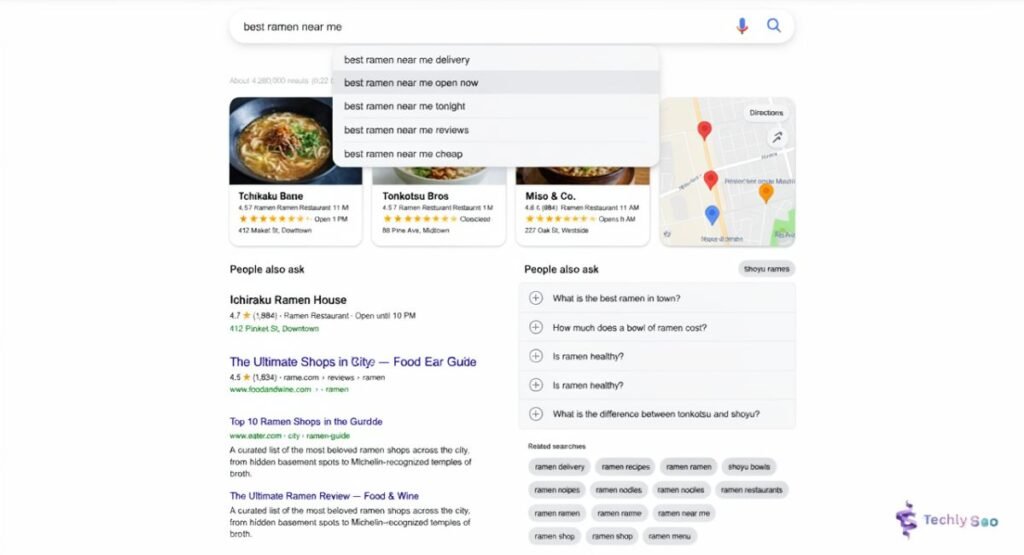
Find Local Keywords From Google Search Results
Google itself can act as a powerful research source. Search your main services with different locations and study what appears. Look at autocomplete suggestions, related searches, People Also Ask questions, local listings, and organic results. These features reveal how Google connects topics with user needs.
Search results also show what type of content Google considers useful for a query. If most results are service pages, don’t create a generic blog post. If users see guides and comparison content, a purely promotional page may struggle to match the expected intent.
Use Google Autocomplete
Start typing a service, problem, or location into Google. Watch the suggestions that appear. Try different combinations. Add words such as “near me,” “best,” “cost,” “open now,” or a neighborhood name. Save useful suggestions and validate them before targeting them.
Check People Also Ask
People Also Ask can reveal question-based searches around your topic. These questions can become FAQ sections, supporting articles, or subsections within service pages. The goal isn’t to copy every question. Choose questions that genuinely help your target customers.
Explore Related Searches
Related searches can uncover close variations that you may have missed. They are especially useful for finding alternative service names and longer phrases. Compare them with your existing keyword list and group terms that share the same intent.
Analyze the Local Pack
The Local Pack can show which businesses Google considers relevant to a local query. Study the services, categories, reviews, and landing pages connected with those businesses. Don’t copy them. Instead, use the results to understand the competitive environment.
Study Search Result Features
Pay attention to Maps, reviews, organic listings, featured results, and AI Overviews when they appear. Search features can change how users interact with results. Your strategy should focus on satisfying the underlying need rather than trying to force one exact phrase into a page.
Analyze Competitors to Find Local Keyword Opportunities
Competitor research can reveal gaps in your current strategy. Start with businesses that rank for important searches in your target areas. Study their pages, service coverage, locations, content depth, and internal links. This competitor analysis can show where you can build something more useful.
However, competitor research shouldn’t become a copying exercise. Your goal is to understand the competitive landscape and identify missing opportunities. Look for questions they don’t answer, services they explain poorly, local details they ignore, or customer concerns their pages fail to address.
Identify Your Local SEO Competitors
Your competitors aren’t always the businesses you compete with offline. Search competitors are the websites and businesses appearing for your important queries. A national directory may compete with you for one term, while a local specialist may compete for another.
Find Competitor Keywords
Study the competitor keywords that send traffic or visibility to competing pages. Look at service terms, location phrases, problem-based searches, and informational topics. Then compare them with your own coverage. Remove irrelevant terms before adding useful opportunities to your strategy.
Find Keyword Gaps
A keyword gap exists when another site ranks for a useful query, and your site doesn’t have a strong result. Look for gaps that match your services and customers. A gap only matters when you can create a genuinely useful page or improve an existing one.
Analyze Competitor Content Quality
Don’t judge competitors only by word count. Study whether their pages answer customer questions, explain services clearly, provide local information, and guide visitors toward action. Your opportunity may be deeper expertise, clearer explanations, better examples, stronger evidence, or a more useful page experience.
Look for Underserved Local Searches
Neighborhood-level queries, emergency services, pricing questions, and specialized services can reveal overlooked demand. For example, a general “plumber Dallas” page may not fully address “slab leak repair in North Dallas.” Specific searches can uncover valuable gaps when the business genuinely serves those customers.
Group Keywords by Search Intent and Topic
Once you’ve collected enough terms, stop treating every phrase as a separate target. Group related terms into keyword clusters based on meaning and intent. This prevents thin pages from competing with one another and creates a more organized structure for your website.
A useful cluster usually has one main topic with several closely related variations. For example, “AC repair Phoenix,” “air conditioner repair Phoenix,” and “emergency AC repair Phoenix” may belong together when they share the same core service intent. You don’t need to create a separate page for every keyword variation.
Group Keywords by Search Intent
Separate informational searches from commercial and transactional searches. “What is the recommended frequency for AC servicing?” needs a different page from “AC repair Phoenix.” The first may work well as supporting blog content. The second usually deserves a strong service page.
Create Local Keyword Clusters
Build clusters around services, problems, locations, and customer needs. Group closely related keywords together when a single page can cover them naturally. This approach creates stronger topical coverage and reduces the temptation to publish many nearly identical pages.
Build Service-Based Keyword Themes
Imagine a roofing company. Its themes might include roof repair, roof replacement, storm damage, roof inspection, and emergency roofing. Each theme can contain several related local phrases. This turns your keywords into a focused content strategy rather than a scattered collection of terms.
Build Location-Based Keyword Themes
Location themes can include cities, neighborhoods, suburbs, and counties. However, don’t create dozens of pages by changing only the location name. Each useful location page should contain information that genuinely helps people in that area.
Map Local Keywords to the Right Pages
Keyword mapping connects your research with your website. Assign a primary keyword or tightly related cluster to each important page. Then decide which terms belong on your homepage, service pages, location pages, and supporting articles. This shows how closely search intent connects with the type of content you create.
Good mapping also reduces keyword cannibalization. If two pages target the same intent, Google may struggle to determine which page best answers the query. Instead of creating another page, consider improving, combining, or repositioning the existing content.
Map Primary Keywords to Service Pages
Your service pages should target important commercial searches. A Miami HVAC company might use an AC repair page for “AC repair Miami” and a furnace repair page for a separate service. Each page should explain that service clearly and help visitors take the next step.
Use Location Pages for Area-Specific Searches
Location pages can target genuine service areas. A company serving Austin and Round Rock may need different pages if each area has distinct customers and useful local information. Avoid doorway-style pages that offer little value beyond a changed city name.
Use Blog Posts for Informational Keywords
Use supporting blog content for questions and educational searches. A dentist could create an article about dental implant costs while its service page targets dental implants. The two pages serve different intents while supporting the same overall topic.
Avoid Local Keyword Cannibalization
If two pages target the same intent, review their roles. You may need to merge them, change one target, or strengthen their differences. A well-planned keyword map gives each page a clear purpose and helps search engines understand your site more easily.
Create a Local Keyword Mapping Table
| Keyword | Intent | Location | Page Type | Priority |
| AC repair Phoenix | Commercial | Phoenix | Service page | High |
| emergency AC repair Phoenix | Transactional | Phoenix | Service page | High |
| AC repair cost | Informational | Broad | Blog post | Medium |
| HVAC company Scottsdale | Commercial | Scottsdale | Location page | High |
| how often to service AC | Informational | Broad | Blog post | Medium |
This type of map keeps your site structure organized and makes future content planning easier.
Optimize Your Website and Google Business Profile for Local Keywords
After research, use your findings naturally across your website. Use important keywords naturally in places where they make the content clearer for readers. This can include titles, headings, body content, URLs, internal links, and image context. Don’t repeat the same keyword phrase throughout every section.
Your Google Business Profile can also play an important role in improving your local search presence. Google says complete and accurate business information helps it understand and display local businesses. A verified profile can help your business show up in both Google Search and Google Maps. Keep your services, hours, contact details, categories, and other information accurate.
Optimize Page Titles and Meta Descriptions
Create titles that clearly describe the service and location when needed. Write meta descriptions that highlight the page’s value instead of simply repeating keywords. A strong title can improve clicks because users quickly understand whether the result matches their need.
Optimize H1, H2, and H3 Headings
Use natural keyword variations across headings. Avoid using the exact same keyword phrase in every heading. Make your H1 clearly explain what the page is about. Use H2 and H3 headings to group related ideas and address questions that are useful to your readers.
Improve Local Content
Useful local content goes beyond repeating a city name. Explain services, common local problems, service boundaries, nearby areas, pricing factors, and customer questions where relevant. This improves semantic relevance and gives visitors a reason to trust the page.
Optimize Your Google Business Profile
A fully completed Business Profile can make it easier for customers to discover your business through Google Search and Maps. Keep the business name, category, hours, services, website, and contact details accurate. Include helpful photos and reply to customer reviews. Don’t add keywords unnaturally to the business name.
Strengthen Internal Linking
Connect related service pages, location pages, and articles with useful internal links. For example, an article about AC maintenance can link naturally to an AC repair service page. This helps users navigate the site and supports a logical content relationship.
Maintain NAP and Local Business Information
Make sure your business name, address, and phone number remain consistent across relevant platforms. Check important directories and profiles for outdated details. Consistency helps reduce confusion for customers and supports a cleaner local presence across the web.
How to Track and Improve Your Local Keyword Rankings
Local SEO isn’t a one-time project. Search behavior changes, competitors publish new content, services change, and Google updates its systems. Review your data regularly and focus on trends rather than obsessing over one ranking position. A keyword that moves from 18 to 8 may be more meaningful than a small daily fluctuation.
Use Google Search Console to review clicks, impressions, CTR, queries, and pages. Then connect those insights with business outcomes. A ranking increase means little if it produces no qualified leads. The strongest strategy connects local rankings, visibility, traffic, and conversions.
Track Local Keyword Rankings
Track important terms by service and location. If possible, monitor results from the areas you serve instead of relying on a single national ranking view. Local results can vary by searcher’s location, so one ranking number doesn’t always tell the full story.
Monitor Google Search Console
Use Search Console to find rising queries, declining pages, and opportunities with strong impressions but weak clicks. You can filter data by query, page, country, device, and date. This makes it easier to find changes that deserve investigation.
Measure Local Business Results
Track business actions, not only rankings. Compare keywords and pages with phone calls, form submissions, bookings, direction requests, and conversions. If a lower-volume keyword consistently creates customers, it may deserve more attention than a high-volume term that produces little business.
Find Keywords That Need Improvement
Look for pages with many impressions but low CTR. Also examine terms ranking around positions 5–20. These pages may have room for stronger titles, clearer content, better internal links, or improved search-intent alignment. Always inspect the actual results before making changes.
Update Your Keyword Strategy Regularly
Review your research every few months. Add new services, locations, customer questions, and emerging search phrases. Watch changes in search behavior, competitors, and AI-driven search. Your keyword strategy should evolve as your customers and the search landscape evolve.
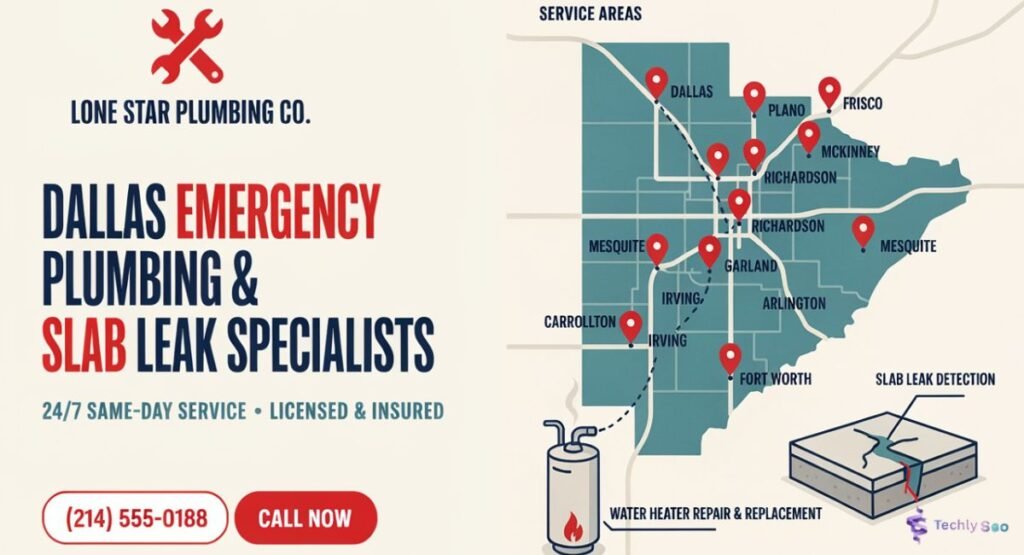
Local SEO Keyword Research Case Study
Imagine a fictional plumbing company called River City Plumbing that serves Dallas, Texas. The company initially targets only “plumber Dallas.” That term is broad and competitive. After deeper research, the company discovers demand around emergency repairs, slab leaks, water heaters, and neighborhood-level searches.
Instead of creating one giant page, the company maps each strong intent to the right destination. Its main plumbing page targets the broad service. Separate service pages cover water heater repair and slab leak repair. Useful location pages support genuine service areas. Blog content answers questions about plumbing costs and common problems.
| Research Finding | Action | Expected Business Value |
| Broad plumbing term | Improve main service page | Broader visibility |
| Emergency searches | Create emergency service content | Faster lead opportunities |
| Slab leak searches | Build dedicated service page | Strong commercial intent |
| Local questions | Publish useful guides | Supporting organic traffic |
| Neighborhood demand | Create useful area coverage | Better local relevance |
The lesson is simple. Don’t build your strategy around one keyword. Build it around the problems, services, locations, and decisions your customers make. That approach gives your website more useful coverage while keeping each page focused.
Final Thoughts on Local SEO Keyword Research
Strong local SEO keyword research starts with understanding your customers. Find the services they need, the places they search from, and the language they use. Then study Google results, your own data, competitors, and keyword tools to uncover opportunities that fit your business.
The best strategy doesn’t chase every keyword. It selects terms with real relevance and clear intent. When you connect those terms to useful pages, accurate Business Profile information, strong internal links, and measurable business goals, you create a local SEO system that can grow with your business.
FAQs
What is the 80/20 rule in SEO?
The 80/20 rule means focusing on the 20% of SEO activities that can produce 80% of your results, such as high-value keywords, quality content, and strong backlinks.
Can I do local SEO myself?
Yes, you can do local SEO yourself by optimizing your website, Google Business Profile, local keywords, reviews, and citations.
How can I research keywords for SEO?
Use tools like Google Keyword Planner, Google Search, Google Trends, Semrush, or Ahrefs to find relevant keywords with good search potential.
What is the difference between SEO and local SEO?
SEO targets a broader audience through search engines, while local SEO focuses on improving visibility for customers searching within a specific location.
Is SEO dead now with AI?
No. SEO isn’t dead, but it’s changing with AI. Businesses still need useful content, strong websites, authority, and content that matches search intent.
How much should I pay for local SEO?
Local SEO can range from a few hundred to several thousand dollars per month depending on competition, location, services, and the agency’s scope.