

SEO for Lawyers has become essential for law firms that want to attract more clients in today’s competitive digital landscape. When people need legal help, they usually search online before contacting an attorney. A strong SEO strategy helps your firm improve visibility, reach the right audience, and build trust through valuable information.
By focusing on Law firm SEO, Legal SEO, Local SEO for lawyers, Search engine rankings, and Lawyer website optimization, you can create a powerful online presence that connects with potential clients and generates consistent leads. A well-planned approach ensures your firm stands out where clients are actively searching.
What Is SEO for Lawyers and How Does It Work in 2026?
SEO for Lawyers is the process of improving a legal website so it appears higher in search engines when people look for legal information or services. It combines content optimization, technical improvements, authority building, and local strategies to increase visibility.
A simple example explains the idea. Imagine someone searches “car accident lawyer near me.” Google does not randomly choose websites. It studies hundreds of signals, including relevance, location, website quality, reputation, and trust. The firms that send strong signals usually appear higher.
Modern Attorney SEO focuses on understanding what people need at every stage of their search journey. Someone searching “what happens after a DUI arrest” needs educational content. Someone searching “hire a DUI attorney today” is ready for a consultation. SEO connects both users with the right information.
| SEO Element | Purpose for Law Firms |
| Content optimization | Helps answer legal questions |
| Local SEO | Helps people find nearby attorneys |
| Technical SEO | Makes websites easier for Google to understand |
| Authority building | Shows credibility and expertise |
| Conversion optimization | Turns visitors into inquiries |
In 2026, search behavior continues to change. People now use traditional search engines, voice assistants, and AI platforms to find answers. This means law firms need a broader approach that includes AI search optimization along with traditional SEO.
A successful strategy does not focus only on rankings. It focuses on becoming the most helpful and trustworthy resource for people facing legal problems.

Understanding How Search Engines Evaluate Legal Websites
Google evaluates legal websites differently because the Legal industry falls under a category called YMYL content (Your Money or Your Life). These topics can affect someone’s finances, safety, or important life decisions.
Because of this, Google pays close attention to Experience, Expertise, Authoritativeness, and Trustworthiness. These are known together as E-E-A-T.
For example, a blog about divorce laws should sound as if it were written by someone who genuinely understands the legal system and has relevant knowledge of the subject. It should show clear authorship, accurate information, and professional review from a qualified Licensed attorney.
Strong legal websites usually include:
| Trust Factor | Example |
| Experience | Real attorney involvement |
| Expertise | Detailed legal knowledge |
| Authoritativeness | Recognized legal reputation |
| Trustworthiness | Accurate information and transparency |
This is why attorney profiles, Attorney credentials, Bar admissions, and expert-reviewed content matter so much.
How Search Intent Shapes SEO for Lawyers
Every search has a purpose. Understanding Search intent helps law firms create pages that match what users actually need.
For example:
| Search Type | Example Query | Best Content Type |
| Informational | “How does bankruptcy work?” | Legal guide |
| Commercial | “Best bankruptcy lawyer in Texas” | Service page |
| Transactional | “Hire bankruptcy attorney” | Contact-focused page |
Good Legal search optimization starts by understanding these differences. A common mistake is creating one general page and expecting it to rank for every search.
An effective strategy focuses on creating separate pages that address the specific needs and interests of different users. A bankruptcy attorney should have separate pages for Chapter 7, Chapter 13, consultations, and location-based services.
Why Is SEO Important for Law Firms?
The importance of SEO for Lawyers comes down to one simple fact: people search before they hire. When someone needs legal help, they usually want answers quickly. A strong online presence helps your firm appear at the exact moment someone needs assistance.
Unlike traditional advertising, SEO attracts people who already show interest. These users are not casually browsing. They are often searching because they have a problem and need a solution.
For many firms, SEO becomes a major source of Lawyer lead generation because it connects attorneys with people actively looking for representation.
SEO Helps Lawyers Attract Better Clients
Not all website visitors are valuable. Thousands of random visitors do not help your business if they never contact your firm.
The goal of SEO is attracting qualified Leads.
For example:
A visitor searching “what is personal injury law” may still be researching.
A visitor searching “personal injury lawyer after car accident in Miami” has stronger buying intent.
SEO helps your website appear for both types of searches while guiding users toward a Client consultation.
This process improves your chances of gaining clients because your website meets people at the right moment.
SEO Creates Long-Term Visibility for Law Firms
Paid advertising can bring immediate traffic, but the visibility usually disappears when you stop spending money. SEO works differently. When you build strong pages, earn trusted links, and create valuable content, you create digital assets that continue working over time. A well-optimized Legal website can continue attracting visitors months or years after publishing helpful content. This is why many firms invest in SEO services for lawyers instead of relying only on advertising.
SEO Builds Trust and Professional Reputation
People want confidence before choosing an attorney. A law firm appearing on the first page of Google often feels more established and credible.
Your online reputation grows through:
| Trust Element | Why It Matters |
| Online reviews | Shows client satisfaction |
| Attorney profiles | Demonstrates experience |
| Helpful content | Builds authority |
| Case studies | Shows knowledge and results |
| Professional website | Improves confidence |
A strong Law firm online presence does not happen overnight. It grows through consistent effort, accurate information, and a focus on helping potential clients.
What Makes Law Firm SEO Different From Regular SEO?
Law firm SEO requires a different approach than SEO for e-commerce stores, travel sites, or technology businesses. The legal market has stricter requirements because people rely on attorneys for serious decisions that can affect their finances, freedom, family, and future.
A successful Legal SEO strategy must consider trust, location, competition, and professional responsibility. A website that works well for another industry may fail for a law firm because legal clients look for proof, experience, and credibility before they contact an attorney.
For example, a clothing website can rank by showing product features and prices. A legal website must show why someone should trust that attorney with a sensitive legal matter.
Legal Websites Require Strong E-E-A-T and YMYL Signals
Google considers legal topics as YMYL content because inaccurate information can negatively impact people’s lives. That means law firms need stronger quality signals than many other industries.
Your website should clearly demonstrate Expertise, Experience, Authoritativeness, and Trustworthiness through genuine information.
A strong legal website usually includes:
| Trust Signal | Example |
| Attorney profile | Detailed lawyer background |
| Experience | Years of legal practice |
| Credentials | Education and Bar admissions |
| Reviews | Verified client feedback |
| Content quality | Helpful legal explanations |
Attorney-authored content is especially valuable because readers want information from someone who understands the law. A blog written or reviewed by a qualified attorney creates stronger trust than generic content written only for rankings.
For example, a divorce guide becomes more valuable when it explains state-specific laws, common challenges, and practical steps from an experienced Divorce lawyer.
Local Competition Makes Legal SEO More Challenging
Most legal searches have a location attached to them. Someone rarely searches only for “ lawyer.” They search for a specific service in a specific place.
Examples include:
Personal injury lawyer in Houston
Criminal defense lawyer in New York
Immigration lawyer near Dallas
Family lawyer in California
This makes Local SEO for lawyers one of the most important parts of a legal marketing strategy.
A firm may be excellent nationally but still struggle to attract clients if it does not appear in local searches. Google looks at location signals, reviews, business information, and local authority when deciding which firms appear. Your Google Business Profile optimization should be a priority because it directly affects local visibility.
This is why Local search rankings and visibility in the Google Map Pack can directly influence the number of phone calls and consultation requests a law firm receives.
Legal Advertising Rules Affect SEO Strategy
The legal industry has advertising rules that other industries often do not face. Every claim, testimonial, and marketing statement must follow professional guidelines.
A law firm cannot simply publish exaggerated promises such as “we guarantee you will win your case.” This can create compliance issues.
Good Legal marketing focuses on transparency. It explains services clearly without making unrealistic promises.
For example:
Weak approach:
“We guarantee the biggest settlement.”
Better approach:
“Our legal team supports people who have been injured by explaining their rights, exploring their legal options, and helping them seek fair compensation.”
SEO success is not only about visibility. It is also about maintaining Legal compliance and building a trustworthy reputation.
Keyword Research for Lawyers: Find High-Intent Legal Searches
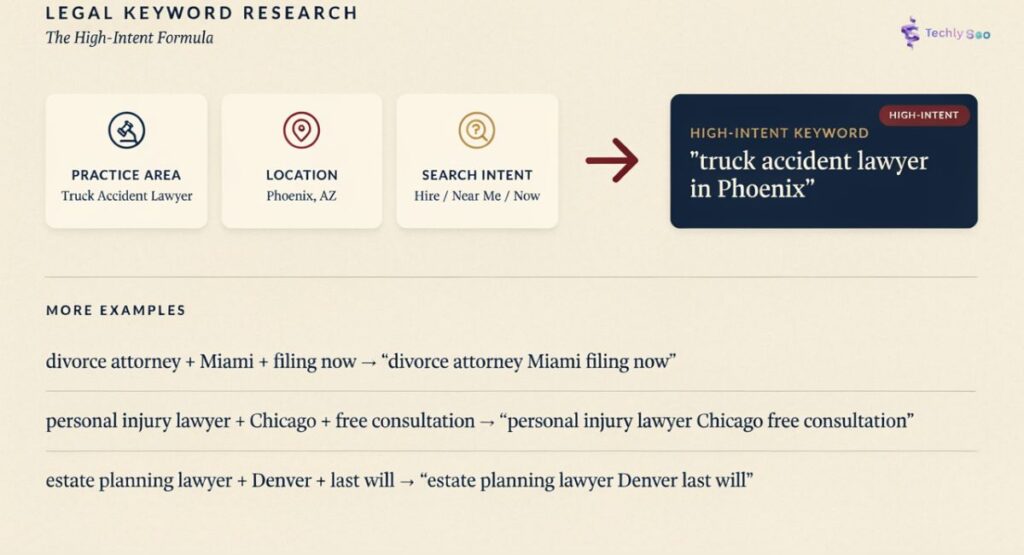
Effective Keyword research for lawyers is the foundation of successful SEO for attorneys. Many firms make the mistake of targeting broad keywords with high search volume but low client value.
The goal is not simply to attract more visitors. The goal is to attract people who need legal help and are likely to contact your firm.
A smart Legal keyword strategy focuses on practice areas, locations, problems, and user intent.
Choose Keywords Based on Practice Areas
Every law firm has different services, so keyword research should start with the legal areas you actually serve.
For example:
| Practice Area | Keyword Examples |
| Personal injury | car accident attorney, injury lawyer near me |
| Criminal law | criminal defense attorney, DUI lawyer |
| Family law | child custody lawyer, divorce attorney |
| Immigration law | immigration lawyer consultation |
| Business law | business attorney for contracts |
Creating dedicated pages around these services helps Google understand what your firm offers.
These pages are called Practice area pages, and they are often some of the most valuable pages on a law firm website.
Use Location-Based and Long-Tail Legal Keywords
Most clients want an attorney nearby. This makes Long-tail legal keywords extremely valuable.
A broad keyword:
“injury lawyer”
is difficult and competitive.
A more specific keyword:
“truck accident lawyer in Phoenix”
shows stronger intent and usually attracts a more qualified visitor.
Location-focused searches help firms improve their Organic search visibility because they match how real people search.
Examples of useful location keywords:
| Keyword Type | Example |
| City keyword | Chicago divorce lawyer |
| Neighborhood keyword | Brooklyn injury attorney |
| “Near me” keyword | DUI lawyer near me |
| Service + location | Immigration lawyer Miami |
Match Keywords With Search Intent
Keyword selection is not only about words. It is about understanding what the searcher wants.
Search intent optimization helps you create the right content for each stage of the client journey.
| Search Intent | Example Search | Recommended Page |
| Informational | How does bankruptcy work? | Legal guide |
| Commercial | Best bankruptcy lawyer | Service page |
| Transactional | Hire bankruptcy attorney | Contact page |
When you match content with intent, visitors find answers faster and are more likely to trust your firm.
Build an SEO-Friendly Law Firm Website Architecture
Your website structure affects both user experience and rankings. A confusing website makes it harder for visitors to find information and harder for Google to understand your services.
A strong Website architecture organizes information logically so users and search engines can easily navigate your content.
A professional legal website should clearly separate services, locations, attorney information, and educational resources.
Create Dedicated Practice Area Pages
Many law firms make one common mistake: they place every service on a single page called “Services.”
This limits ranking opportunities.
Instead, create separate pages for each major service.
For example:
A personal injury firm should have:
- Car accident lawyer page
- Motorcycle accident lawyer page
- Truck accident lawyer page
- Workplace injury page
Each page should explain the service, answer client questions, and include a clear contact option.
These pages help improve Search engine rankings because each page targets a specific need.
Build Location Landing Pages for Local Visibility
If your firm serves multiple cities, Location landing pages can help you reach more local searches.
A good location page should include:
- Local office information
- Attorney details
- Services available in that area
- Local legal concerns
- Directions and contact details
However, copying the same page and changing only the city name can hurt performance.
Every location-specific page should offer useful, original information that is relevant to people in that area.
For example, a Miami family law page should discuss local considerations instead of using the same content as a New York page.
Use Internal Linking to Connect Important Pages In SEO For Lawyers
Internal linking helps users discover more content and helps Google understand relationships between pages.
For example:
A blog about “What happens after a car accident?” can link to:
- Car accident lawyer service page
- Personal injury consultation page
- Local accident attorney page
This creates a connected content system that improves navigation and supports stronger rankings.
On-Page SEO for Law Firm Practice Area and Location Pages
Strong On-page SEO helps search engines understand what each page offers and helps visitors quickly find the information they need. For law firms, every page should answer a specific legal question, explain the service clearly, and guide users toward taking action.
A well-optimized legal website does not simply place keywords everywhere. Instead, it combines useful information, proper page structure, trust signals, and a smooth user experience. When done correctly, Lawyer website optimization improves visibility, attracts better visitors, and supports more client inquiries.
Optimize Titles, Headers, URLs, and Meta Descriptions
Your page elements tell Google what your content is about. Title tags, Meta descriptions, Headers, and URLs should clearly explain the page topic while naturally including relevant keywords.
For example:
Weak title:
Legal Services | Smith Law
Better title:
Personal Injury Lawyer in Dallas | Experienced Accident Attorneys
The second option immediately tells both Google and users what the page covers.
A strong on-page structure usually includes:
| SEO Element | Best Practice |
| Title tags | Include service and location naturally |
| Meta descriptions | Explain value and encourage clicks |
| Headers | Organize information clearly |
| URLs | Keep them short and descriptive |
| Image alt text | Describe images accurately |
Your page should also use relevant Keywords naturally. Avoid repeating the same phrase too often because search engines now focus more on meaning, context, and usefulness.
Create Client-Focused Legal Pages
Many law firm websites focus too much on describing the attorney and not enough on helping the visitor. Remember, people usually visit your website because they have a problem.
A strong service page should answer questions such as:
- What legal issue does this service cover?
- What options does the client have?
- What steps should they take next?
- Why should they choose your firm?
For example, a Personal injury lawyer page should explain the claims process, common accident types, possible compensation factors, and how clients can request help.
Good pages combine legal knowledge with simple explanations. A visitor should not need a law degree to understand your content.
Use Schema Markup and Structured Data
Search engines need clear information about your business. Schema markup and Structured data help Google understand details about your law firm.
For legal websites, important schema types include:
| Schema Type | Purpose |
| LegalService schema | Explains legal services offered |
| LocalBusiness schema | Provides business location details |
| Attorney schema | Highlights lawyer information |
| FAQ schema | Helps search engines understand questions |
Adding proper structured data can improve how your information appears in search results. It does not guarantee higher rankings, but it helps search engines better understand your website.
Create Legal Content That Builds E-E-A-T and Trust
Content plays a major role in Legal SEO because potential clients often research their problems before contacting an attorney. Helpful content builds confidence and shows that your firm understands real legal challenges.
However, legal content must be accurate and trustworthy. Google evaluates legal pages carefully because incorrect advice can harm users. This is why E-E-A-T is essential for law firms.
A strong Legal content strategy focuses on answering real client questions while demonstrating professional knowledge.
Publish Attorney-Authored and Reviewed Content
People trust information more when they know who created it. Attorney-authored content helps demonstrate real experience and professional knowledge.
A strong legal article should include:
| Content Element | Benefit |
| Attorney name | Shows accountability |
| Credentials | Builds trust |
| Practice experience | Demonstrates expertise |
| Review date | Shows freshness |
For example, an article about immigration rules becomes more valuable when reviewed by an experienced Immigration lawyer who understands current regulations.
Your website should highlight Attorney credentials, professional background, and relevant experience. These details create stronger Trust signals for both users and search engines.
Create Content Around Real Client Questions
The best legal content starts with the questions people actually ask.
Instead of writing only general topics, create resources around specific problems.
Examples:
| Client Question | Content Opportunity |
| “How long does a divorce take?” | Divorce timeline guide |
| “Can I sue after a car accident?” | Personal injury article |
| “What happens after an arrest?” | Criminal defense guide |
This approach improves Search intent optimization because your content matches what users are looking for.
Helpful content also increases Organic traffic because each article creates another opportunity to appear in search results.
Build Authority With Topic Clusters and Pillar Pages
Modern SEO rewards websites that show deep knowledge about a subject. This is where Topic clusters and Pillar pages become valuable.
A pillar page covers a broad topic, while supporting articles explain smaller related topics.
Example:
Pillar page:
Personal Injury Law Guide
Supporting pages:
- Car accident claims
- Motorcycle accidents
- Medical expenses after injury
- Insurance negotiation process
Connecting these pages through Internal linking helps users explore your website and helps Google understand your expertise.
Local SEO for Lawyers: Rank in Google Maps and the Local Pack
For many attorneys, local visibility is the difference between getting regular inquiries and being invisible online. People usually search for nearby legal help, which makes Local SEO for lawyers a critical part of any marketing strategy.
When someone searches “lawyer near me,” Google uses location signals, reputation, and relevance to decide which businesses appear in the Google Map Pack.
A strong local strategy helps improve Local search rankings and brings more qualified visitors.
Optimize Your Google Business Profile
Your Google Business Profile optimization should be a priority because it directly affects local visibility.
Your profile should include:
| Profile Element | Importance |
| Business name | Builds recognition |
| Correct category | Helps Google understand services |
| Address and phone | Supports trust |
| Photos | Improves engagement |
| Reviews | Influences decisions |
Keep your information updated and respond professionally to reviews. A complete profile helps Google understand that your firm is active and legitimate.
Maintain NAP Consistency and Legal Citations
Consistency matters in local SEO. Your business details should match everywhere online.
NAP consistency means keeping your:
- Name
- Address
- Phone number
the same across your website, directories, and profiles.
Incorrect information can confuse search engines and weaken trust.
Quality Legal citations from trusted directories can also support local visibility. Examples include legal directories, professional organizations, and relevant business listings.
Create Strong Location Landing Pages
Law firms serving multiple areas should create useful Location landing pages.
A good location page should include:
- Local office information
- Attorneys serving that area
- Relevant legal services
- Local client concerns
- Directions and contact options
Avoid creating dozens of identical pages with only the city name changed. Google prefers unique pages that provide genuine value.
For example, a California family law page should discuss local legal considerations instead of copying a Texas page.
Build Law Firm Authority With Backlinks, Citations, and Brand Mentions
A strong website alone is not always enough to compete in the legal market. Search engines also look at how other trusted websites recognize your firm. This is where Backlink building, online reputation, and authority signals become important.
When respected websites mention your firm, link to your content, or reference your expertise, Google sees these as signs that your website has value. These links act like recommendations. However, quality matters more than quantity. One link from a trusted legal publication can be more valuable than dozens of unrelated links.
A successful Legal digital marketing strategy combines content, relationships, and reputation management to improve Search engine rankings.
Earn High-Quality Legal Backlinks
Not all backlinks provide the same value. Search engines evaluate the quality, relevance, and trust of websites linking to you.
A backlink from a respected legal organization, news website, or professional publication carries more weight than a link from a random directory.
Strong sources for Legal backlinks include:
| Backlink Source | Why It Helps |
| Legal publications | Shows industry recognition |
| Bar associations | Builds professional authority |
| Local news websites | Improves community trust |
| Educational websites | Adds credibility |
| Industry organizations | Supports expertise |
For example, if a local newspaper quotes an attorney about a legal issue and links to the firm’s website, that mention creates a strong authority signal.
The goal is not collecting hundreds of links. The goal is earning relevant links from websites that Google trusts.
Use Digital PR and Link Earning Strategies
Modern SEO focuses more on Link earning rather than traditional link building.
Link earning means creating something valuable enough that other websites naturally want to reference it.
Examples include:
- Legal research reports
- Original surveys
- Expert commentary
- Legal guides
- Community resources
- Data-based articles
A law firm can also use Digital PR by sharing attorney opinions on important legal topics.
For example, if a lawyer provides expert comments about a new state law change, news websites may reference that expertise. This improves brand visibility and builds stronger authority.
Avoid Low-Quality Link Building Practices In SEO For Lawyers
Some SEO providers promise hundreds of backlinks quickly. This often creates problems instead of results.
Avoid:
- Spam directories
- Paid link networks
- Irrelevant websites
- Automated link systems
- Private blog networks
Google wants natural authority. A website should earn trust because it provides valuable information, not because it manipulates ranking systems.
A professional SEO services for lawyers provider should focus on reputation, useful content, and genuine relationships.
Technical SEO and Website Health for Law Firms
Technical performance creates the foundation for successful SEO. Even excellent legal content may struggle if Google cannot properly access, understand, or rank your website.
Technical SEO focuses on improving website performance, structure, security, and accessibility. These improvements help search engines crawl your pages and provide a better experience for users.
For a law firm, technical problems can directly affect leads. A slow website or broken page may cause potential clients to leave before contacting your office.
Improve Website Speed and Core Web Vitals
Website speed matters because users expect fast experiences. Someone searching for legal help may already feel stressed and impatient. A slow website can reduce trust.
Google measures user experience through Core Web Vitals, which evaluate important performance factors.
| Performance Factor | Meaning |
| Loading speed | How quickly content appears |
| Interaction speed | How fast pages respond |
| Visual stability | Whether content moves unexpectedly |
Page speed optimization can improve both rankings and conversions.
Common improvements include:
- Compressing images
- Improving hosting performance
- Removing unnecessary scripts
- Optimizing website code
- Using caching solutions
A faster website helps visitors find information quickly and increases the chance they request a consultation.
Improve Crawlability and Website Structure
Google needs to discover and understand your pages before ranking them. This process depends on proper Crawlability and Indexing.
A healthy legal website should have:
- Clear navigation
- Organized categories
- Proper internal links
- Updated sitemap
- No broken pages
Your Website structure should make sense for both users and search engines.
For example:
Homepage
→ Practice Areas
→ Personal Injury
→ Car Accident Claims
→ Local Office Pages
This structure helps Google understand relationships between pages.
Optimize for Mobile-First Indexing
Most people search for attorneys using smartphones. Because of this, Google uses Mobile-first indexing, meaning it primarily evaluates the mobile version of your website.
Your website should provide:
- Easy navigation
- Readable text
- Fast loading
- Simple contact options
- Mobile-friendly forms
A visitor should be able to call your office or request a consultation within seconds.
Poor Mobile optimization can reduce visibility and increase lost opportunities.
Use Schema Markup for Better Search Understanding
Search engines need clear information about your business. Schema markup provides additional context about your firm.
Important schema types for law firms include:
| Schema Type | Purpose |
| LegalService schema | Explains legal services |
| LocalBusiness schema | Provides business details |
| Attorney schema | Highlights lawyer information |
| FAQ schema | Organizes common questions |
Using proper Schema markup does not guarantee rankings, but it improves how search engines understand your website.
Optimize Your Law Firm for AI Overviews and AI Search
Search is changing quickly. People are no longer using only traditional search engines. Many users now ask AI platforms questions and expect direct answers.
This makes AI search optimization an important part of future Law firm SEO.
Law firms that provide clear, trustworthy, and well-structured information have a better chance of appearing in AI-generated responses.
Understand Google AI Overviews and AI Search
Google AI Overviews provide users with summarized answers directly in search results.
For example, someone may ask:
“What should I do after a workplace injury?”
Instead of clicking several websites, Google may provide an AI-generated summary with sources.
This changes how law firms approach content. Ranking is no longer only about position one. It is also about becoming a trusted source that AI systems recognize.
Create Content That AI Systems Can Understand
AI systems prefer content that clearly answers questions.
Your content should include:
- Clear explanations
- Direct answers
- Organized headings
- Accurate information
- Expert review
Question-based content works especially well.
Examples:
- “How does child custody work?”
- “What happens after a DUI arrest?”
- “How long does a personal injury claim take?”
Strong AI-generated summaries usually come from websites that already demonstrate expertise and trust.
Build Authority Across Search Platforms
AI visibility depends on more than one page. Search engines look at your overall reputation.
Important factors include:
- Quality content
- Strong reviews
- Consistent business information
- Expert mentions
- Trusted backlinks
Law firms should also consider visibility in tools like ChatGPT search and other AI platforms.
The goal remains the same: become a reliable source of legal information.
Measure Law Firm SEO Results and Improve Your Strategy
SEO is not complete after publishing pages or building links. Successful firms regularly measure results and improve their strategy.
SEO performance tracking helps you understand what works, what needs improvement, and where new opportunities exist.
The right measurements focus on business growth, not just rankings.
Track Metrics That Actually Matter
Many businesses focus only on keyword positions. Rankings matter, but they are not the final goal.
A successful SEO campaign should measure:
| Metric | Why It Matters |
| Organic traffic | Shows search visibility |
| Leads | Measures potential clients |
| Conversion rate | Shows website effectiveness |
| Calls | Tracks direct inquiries |
| Consultation requests | Measures business impact |
A page ranking number one means little if nobody contacts your firm.
The real goal is turning Website visitors into qualified Leads.
Use SEO Tools to Monitor Performance
Reliable data helps you make smarter decisions.
Important tools include:
| Tool | Purpose |
| Google Search Console | Tracks search performance |
| Google Analytics | Measures visitor behavior |
| SEO tools | Research competitors and keywords |
| Rank trackers | Monitor positions |
These platforms help identify:
- Ranking improvements
- Traffic changes
- Technical problems
- New keyword opportunities
Continuously Improve Your Law Firm SEO Strategy
SEO is an ongoing process. Search trends change, competitors improve, and Google updates its systems.
A successful firm regularly:
- Updates old content
- Improves weak pages
- Adds new resources
- Reviews competitors
- Expands keyword coverage
The best results come from consistency.
A law firm that treats SEO as a long-term investment can build stronger Search visibility, attract more clients, and create a reliable source of growth.
Conclusion: Build a Sustainable SEO Strategy for Your Law Firm
SEO for Lawyers is no longer optional for firms that want to compete online. Clients search before they contact an attorney, and your website must appear when they need help.
A successful strategy combines Legal SEO, quality content, local optimization, technical improvements, and authority building.
The strongest law firms do not chase shortcuts. They build trust, answer real questions, and create a website that helps people make informed decisions.
Whether you manage SEO internally or work with professional SEO services for lawyers, the goal remains the same: create a trustworthy online presence that brings consistent client opportunities.
FAQs
How long does SEO for lawyers take to show results?
SEO usually takes several months because search engines need time to evaluate content, authority, and website improvements. Competitive legal markets may require a longer strategy.
How much does law firm SEO cost?
The cost depends on competition, location, practice areas, and the level of work required. Small firms may spend less, while competitive markets require larger investments.
Is SEO better than PPC for law firms?
Both strategies can work. PPC provides immediate traffic, while SEO creates long-term organic visibility. Many firms use both together.
How can lawyers improve Google Maps rankings?
Lawyers can improve visibility through Google Business Profile optimization, accurate information, reviews, local content, and strong local authority.
Can small law firms compete with large firms through SEO?
Yes. Small firms can compete by focusing on specific locations, niche services, helpful content, and strong client trust signals.
What is the most important part of law firm SEO?
The most important factor is creating a trustworthy website that combines useful content, technical quality, local visibility, and strong reputation signals.